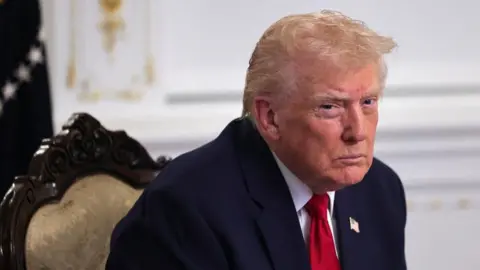
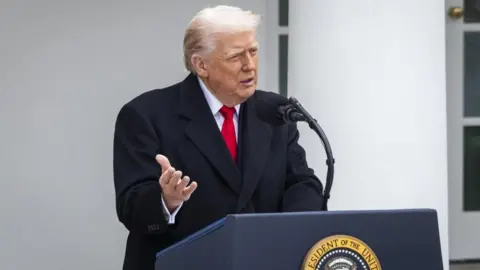
In his final hours in the Middle East, President Trump will finish a visit that has elicited both admiration and concern. His reception in Abu Dhabi was buoyed by the award of the UAE's highest civilian honor, symbolizing a strong diplomatic bond. However, his declaration signifying the end of U.S. nation-building in the region has sparked unease among several Arab leaders, particularly regarding the future of human rights discussions.
The uncertainty within Syria has prompted some expatriate business owners to contemplate returning home, especially after Trump suggested he would roll back sanctions to foster economic revitalization. Meanwhile, Secretary of State Marco Rubio engaged in talks with Syrian officials to delineate a potential roadmap for the country's recovery.
Trump's administration also hinted at progress regarding a nuclear agreement with Iran, addressing a longstanding point of tension. Additionally, a series of technology deals, including the establishment of a massive artificial intelligence hub, showcases the ambitious investment plans aimed at transforming the UAE’s economic landscape.
As President Trump concludes this significant visit, domestic observers remain divided; some praise the focus on peace and economic engagement, while others fear a retreat from meaningful advocacy on human rights issues in the region.
The uncertainty within Syria has prompted some expatriate business owners to contemplate returning home, especially after Trump suggested he would roll back sanctions to foster economic revitalization. Meanwhile, Secretary of State Marco Rubio engaged in talks with Syrian officials to delineate a potential roadmap for the country's recovery.
Trump's administration also hinted at progress regarding a nuclear agreement with Iran, addressing a longstanding point of tension. Additionally, a series of technology deals, including the establishment of a massive artificial intelligence hub, showcases the ambitious investment plans aimed at transforming the UAE’s economic landscape.
As President Trump concludes this significant visit, domestic observers remain divided; some praise the focus on peace and economic engagement, while others fear a retreat from meaningful advocacy on human rights issues in the region.