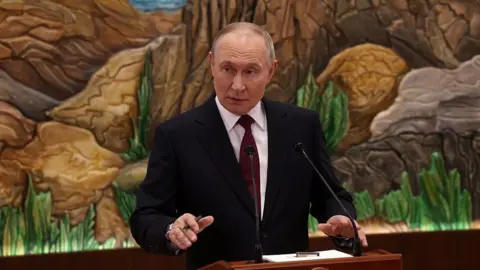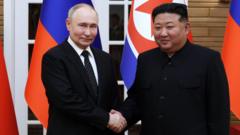
Russian President Vladimir Putin has publicly reaffirmed his "friendship" with North Korean leader Kim Jong Un, coinciding with a pivotal upcoming summit with US President Donald Trump. This meeting between world leaders spotlights the increasing cooperation between Russia and North Korea, particularly in military support as both nations navigate global scrutiny.
Amid allegations of deplorable conditions faced by thousands of North Korean laborers in Russia, Putin and Kim engaged in discussions that emphasized mutual military interests. The Kremlin’s statement following their talks noted an affirmation of "friendship relations, good-neighbourliness and cooperation," particularly with respect to shared strategic goals.
During their conversation, Putin offered Kim an update on the logistics surrounding the Alaska summit, with the intention of strengthening diplomatic ties in the face of Western opposition. Additionally, Putin commended North Korea's military assistance, specifically referencing the collaboration in the ongoing conflict with Ukraine.
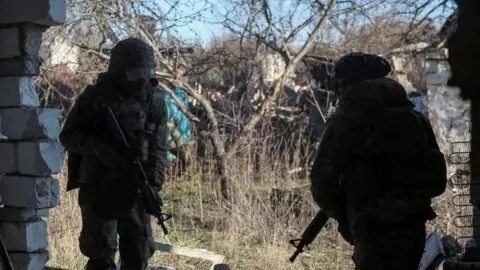
As the dynamics of the war in Ukraine shift, with Russian forces making recent advances, reliance on North Korean troops has reportedly increased. Estimates suggest that up to 10,000 North Korean soldiers are participating alongside Russian forces, a mark of the deepening ties forged out of necessity amidst the backdrop of Russia's diminishing connections with the West.
Despite the increasing military collaboration, the humanitarian aspect raises serious concerns. Reports highlight the "slave-like" conditions under which many North Korean workers are employed in Russia, fueling ongoing debates about labor rights and exploitation. These revelations compel a deeper examination of the implications of such alliances and the human cost associated with geopolitical maneuvering in an era of heightened tensions.
As both leaders prepare for essential summits that could redefine international relations, the implications of this emerging partnership offer a critical lens through which to assess the evolving global landscape.