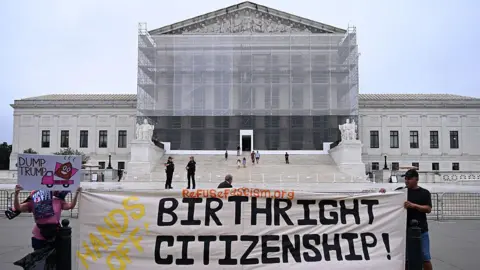
WASHINGTON — The Supreme Court has agreed to take up a significant case regarding the constitutionality of President Donald Trump's executive order on birthright citizenship. This order declares that children born to parents who are in the United States illegally or temporarily are not entitled to American citizenship.
The justices' decision to hear the case follows a lower court ruling that struck down these restrictions, stating they have not been implemented anywhere in the country. The Supreme Court will hear arguments in the spring of 2024, with a ruling expected as summer approaches.
This executive order, signed on January 20, marked the first day of Trump's second term and is part of a broader initiative by his administration to reshape immigration policy. This includes sweeping enforcement actions and appeals to longstanding legislation, such as the 18th-century Alien Enemies Act.
Lower courts have consistently ruled against the administration's stance, with the majority concluding that Trump's order likely violates the 14th Amendment—an amendment established to ensure that all persons born on U.S. soil, with specific exceptions, are granted citizenship. This amendment, a product of the post-Civil War era, aimed to protect the citizenship rights of Black Americans, including former slaves.
The case in question originated from New Hampshire, where a federal judge blocked the executive order following a class action lawsuit involving children who would be impacted by the citizenship order. The administration contends that children of non-citizens do not fall 'under the jurisdiction' of the United States and should not be granted citizenship.
Support for Trump's position is bolstered by 24 Republican-led states and a number of GOP lawmakers. The implications of this ruling will resonate widely, potentially altering the face of American citizenship policy for years to come.