In brief
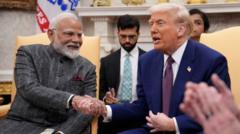
In a pivotal meeting at the White House, US President Donald Trump and Indian Prime Minister Narendra Modi engaged in discussions aimed at revitalizing trade between the two nations, amidst rising tariff threats and immigration concerns.
The two-day visit from Modi marks an attempt to strengthen bilateral relations and address various economic issues. Trump has recently mandated reciprocal tariffs to combat what he describes as an unfair trade system that places the United States at a disadvantage. Bilateral meetings centered heavily on trade, with Trump underscoring that India is poised to increase purchases of American oil and gas. "They need it. And we have it," Trump said, reflecting optimism for economic collaboration. Both leaders have established a rapport over the years, despite occasional trade friction. Modi emphasized a commitment to accelerating cooperation, anticipating that under Trump's leadership, their negotiations would progress at "twice the speed" of past efforts.However, the backdrop of these discussions is a recent announcement from Trump to impose new tariffs on various trading partners globally, with potential implementation set for April. In an Oval Office conference, Trump indicated that allies might pose greater challenges than adversaries in matters of import taxes. The White House highlighted discrepancies in tariff rates, noting that India's average applied tariff stands at 39%, compared to the U.S.'s 5% on agricultural goods afforded to Most-Favored Nation (MFN) statuses. This disparity was a focal point for Trump, who openly criticized current trade practices as detrimental to American interests.As concerns surrounding economic effects grow, economists warn that Trump's tariff measures may lead to increased prices for consumers. While Trump acknowledged these risks, he maintained that his approach would revitalize American manufacturing and create a surge in job opportunities. With Trump's existing tariffs on China and potential tariffs on Canada and Mexico, the trading landscape remains complex and contentious, leaving both nations with challenges to navigate unresolved issues in their trade partnerships. This meeting sets the stage for future trade relations while underlining the importance of addressing structural inequalities that impact both nations.