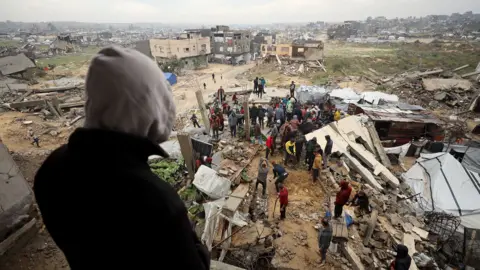
As tensions rise between Israel and Iran, Palestinian civilians find themselves increasingly vulnerable, enduring collateral damage as exchanges of fire escalate. The ongoing confrontation began on Friday, resulting in the fall of approximately 80 missile fragments in Palestinian areas, according to local authorities.
Alaa Jaradat, a Palestinian construction worker living in the Israeli-occupied West Bank, has felt the direct impact of this conflict. His residence was struck by debris from Israeli interceptors engaged with Iranian missiles, injuring his children and damaging their home. Compounding their plight is the absence of government assistance or even warnings, leaving them without any means of protection. “We've had no help from the government, not even a warning,” lamented Jaradat.
The discrepancy in safety measures is stark. While Israeli settlements are typically equipped with bomb shelters and air raid sirens, many Palestinian neighborhoods lack basic warning systems or protective infrastructure. Since the onset of this latest bout of violence, seven individuals have been reported injured in these communities due to falling shrapnel.
This situation has magnified existing frustrations with both the Israeli military presence and the Palestinian Authority, which governs roughly 40 percent of the West Bank. Although the authority has cautioned residents to steer clear of unexploded devices, it has failed to provide comprehensive guidance on safety protocols amid ongoing assaults. “I keep thinking about how I will repair the house,” said Jaradat, who has temporarily relocated his family seeking safety.
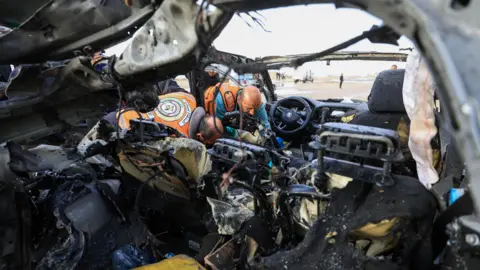
The atmosphere of fear is intensified by continuous Israeli military operations and settler attacks throughout the West Bank. Movement restrictions at Israeli checkpoints further complicate emergency responses, as ambulances struggle to reach the injured. Ahmed Jibreel, leader of the Palestinian Red Crescent, noted the difficulty facing medical personnel: “Continuous passage is nearly impossible,” he explained, adding that patients are often transported on foot between ambulances.
In the face of uncertainty, residents have descended upon gas stations to stockpile fuel, bracing for potential shortages as the conflict escalates. This has given rise to a grim irony voiced by many Palestinians: “What’s the point of stockpiling fuel if you can’t move?”