In brief
Rivers have turned toxic as 'galamsey', or illegal mining, escalates, invoking art and activism from citizens and raising alarm about long-lasting ecological damage.
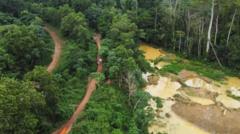
As Ghana grapples with an environmental crisis fueled by illegal gold mining, the repercussions are both immediate and profound. Polluted rivers, once pristine, are now so thick and discolored that artist Israel Derrick Apeti, known as Enil Art, used the water itself as paint to depict the devastation. Mining operations have intensified across the West African nation, employing mercury to extract gold and drawing condemnation from environmental organizations, which have labeled this ongoing tragedy an "ecocide."The Pra River, marked by its dismal transformation, drew the attention of Apeti and his friend Jay Sterling, who documented its pollution to raise awareness. “This river was once teeming with fish and crocodiles,” remarked Apeti, as local communities echoed sorrow over the river's degradation. As Ghana stands as the world’s sixth-largest gold exporter, illegal mining—referred to locally as 'galamsey'—has stretched over thousands of sites across the country, which also produces cocoa, another economic staple.Recent protests erupted in Accra, demanding governmental action against illegal mining, but the police swiftly detained demonstrators, igniting outrage around the country. Young activists resonated with the slogans #stopgalamseynow and #freethecitizens, especially among the Diaspora in Canada and the UK. Apeti's artistic endeavor serves as a poignant reminder of the profound responsibility to protect the environment. "On our way to the river, I thought perhaps I could paint with polluted water," he shared, signaling the need for collective action.In an alarming trend, illegal mining has morphed from individual gold panning to a sophisticated operation spearheaded by foreign businessmen, predominantly Chinese, prioritizing profit over environmental and community welfare. Local farmers face intimidation and land dispossession as illegal mines encroach, leading to widespread deforestation and devastating soil disruption. Notably, an estimated 4,726 hectares of fertile land—equivalent to the size of major European cities—has been destroyed, and vast areas of Ghana's forests have succumbed to this mining frenzy.The repercussions are being felt across agriculture, with cocoa production suffering from loss of farmland. The Ghana Cocoa Board indicated that over 19,000 hectares of cocoa farms have been lost in recent years, contributing to an alarming decline in cocoa output, a major pillar of the nation’s economy. Subsequently, rice farmers have seen their irrigation sources polluted, leaving them with exorbitant costs to seek alternatives.Despite governmental measures, irregular mining continues unabated, as many remain unconvinced of the state's commitment to addressing this environmental catastrophe. Reports indicate that high-ranking officials within the ruling party have their own ties to illegal mining operations, creating a complex web of accountability that undermines efforts for genuine reform.In response to mounting pressure, President Nana Akufo-Addo announced plans to deploy naval boats for immediate cessation of illegal mining activities; however, skepticism remains high among affected communities. Many perceive government actions as mere symbolic gestures lacking substantive follow-through. Local beliefs are fueled by a survey showing overwhelming recognition of illegal mining's devastating impact yet an equally strong perception of it as a lucrative income source.With critical voices calling for more substantial commitments to the environment and local farmers, the struggle against illegal mining takes on a dual significance: as both an environmental fight and a movement for justice. As the economic situation in Ghana remains precarious, the balance between profit and preservation becomes ever more urgent. The ongoing situation serves as a stark reminder that individuals and communities must work collectively to safeguard their resources, health, and future amidst overwhelming challenges.