
In brief
Donald Trump's unexpected meeting with Syria's interim President Ahmed al-Sharaa signals a possible shift in U.S. policy towards Syria, with hopes of lifting sanctions and initiating a rebuilding process. The meeting offers a glimmer of hope for Syrians enduring years of war and hardship.
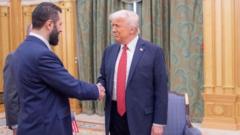
In a meeting that seemed unimaginable just months ago, former U.S. President Donald Trump met with Ahmed al-Sharaa, the interim President of Syria, in Riyadh on Wednesday, stirring renewed optimism among the Syrian populace. Trump indicated that his administration is considering the normalization of relations with Syria, following the fall of the Assad family's long-standing dictatorship.Their 37-minute conversation represented an extraordinary turn of events, especially in light of Trump's earlier declarations that the U.S. had "no interest in Syria." During the encounter, held in a lavish Saudi royal palace, Trump acknowledged the pivotal role played by Saudi Crown Prince Mohammed bin Salman and Turkish President Recep Tayyip Erdogan in prompting this diplomatic shift, including the recent lifting of a $10 million bounty on Sharaa's head just last December.After the meeting, Trump described Sharaa as a "tough guy" with a "very strong past," referencing the latter's previous ties to Al-Qaeda. Since his ascension to power in December, Sharaa has attempted to reshape his image, adopting Western business attire and striving to represent all Syrians.The U.S.'s willingness to reconsider sanctions against Syria has incited celebrations within the country, where approximately 90% of the population live under conditions of extreme poverty following a protracted civil war. Lifting these economic restrictions promises to facilitate foreign aid and investment, crucial in reviving livelihoods in a nation grappling with profound hardship. As a response to Trump’s comments about normalizing relations, there is renewed hope among Syrians that these changes could eventually encourage expatriates to return home and aid the transitional government in restoring order and addressing public discontent.However, experts caution that dismantling the entrenched sanctions framework will be complex and require sustained commitment from the U.S. administration. Some sanctions could be removed quickly, yet many layered restrictions may persist without strong advocacy and momentum.Turkish and Saudi regional powers are now crucial in maintaining U.S. interest in Syria, as they look to shape the country's future alongside President Trump's demands. Chief among these demands is Syria's potential alignment with the Abraham Accords, a significant shift in diplomatic relations with Israel.Al-Sharaa has indicated a willingness to normalize ties with Israel, contingent on the right conditions, despite ongoing tension and military actions in the region. As Trump positions this moment as a "chance at greatness," many Syrians remain hopeful for a more prosperous future after years of suffering and instability.


