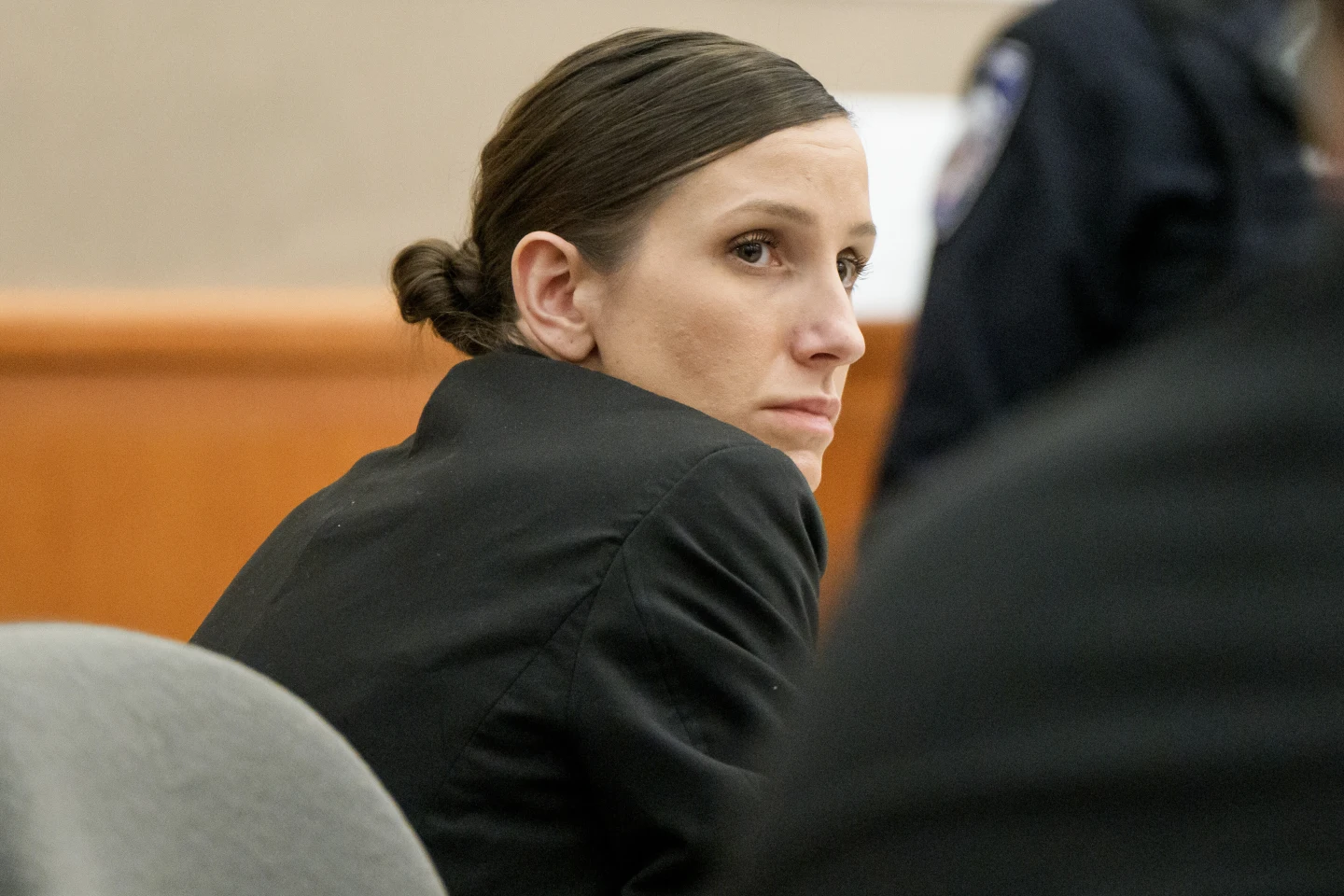
PARK CITY, Utah (AP) — Kouri Richins, a Utah woman who authored a children’s book about grieving the loss of her husband, stands trial on allegations that she murdered him for financial gain.
What was expected to be a five-week trial was abbreviated as Richins declined to testify, prompting her legal team to rest their case without calling any witnesses. Richins' attorneys expressed confidence that the prosecution did not present sufficient evidence to prove her guilt in the murder of her husband Eric Richins, who died in March 2022 from an alleged fentanyl overdose.
Prosecutors allege Richins, 35, slipped five times the lethal dose of fentanyl into a cocktail for her husband at their home in the vicinity of Park City. Additionally, she has been charged with fraud for attempting to collect insurance benefits totaling around $2 million after his murder and possibly attempting to kill him weeks prior with a fentanyl-laced sandwich.
Richins maintains her not guilty plea across all charges, including aggravated murder, which carries a 25-year to life prison sentence if convicted.
Prosecutors aim to underscore their assertion that Richins was motivated by her financial woes, claiming she was $4.5 million in debt and sought to profit from her husband’s death. They presented evidence of numerous life insurance policies taken out on her husband without his awareness. Evidence in the form of text messages suggests her intentions to leave her husband while pursuing a future with another man.
In her defense, attorneys argue that the prosecution's arguments are speculative and lack concrete support. They challenge the credibility of key witnesses, claiming they had ulterior motives and were coerced into providing damaging testimonies.
The case not only influences personal sentiment but unravels the intersection of mental health, grief, and fraud, particularly as Richins had published a children’s book titled “Are You with Me?” aimed at helping her sons process their father’s absence.
As the trial proceeds, both sides prepare for closing arguments, aiming to sway the jury with narratives of love, deception, and the harsh realities of financial distress.