Luis Martinez was on his way to work on a frigid Minneapolis morning when federal agents suddenly boxed him in, forcing the SUV he was driving to a dead stop in the middle of the street.
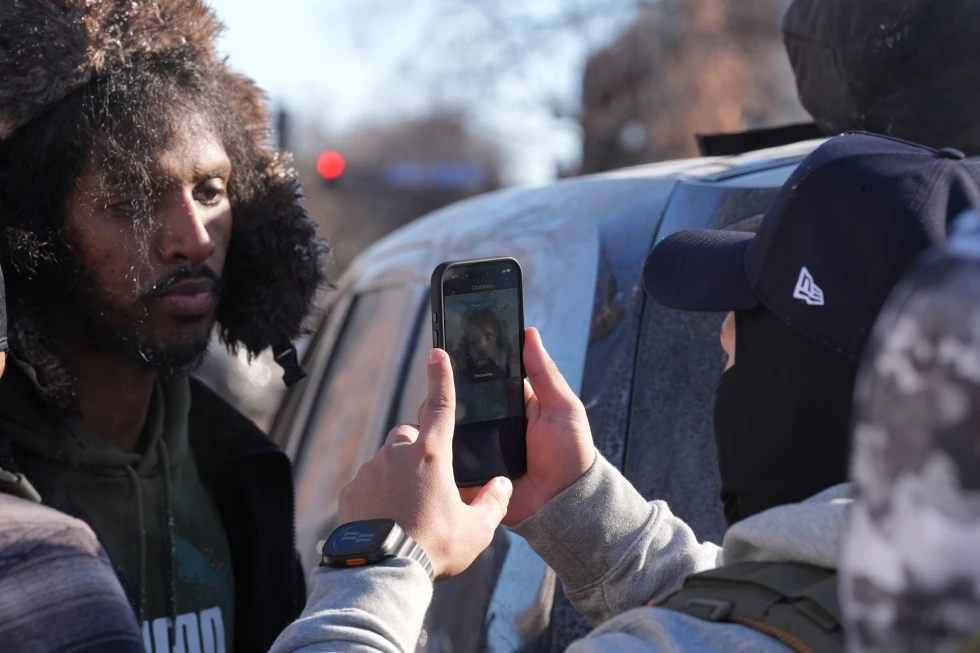
Masked agents rapped on the window, demanding Martinez produce his ID. One agent held his cellphone inches from Martinez’s face and scanned his features, capturing the shape of his eyes, the curves of his lips, and the exact quadrants of his cheeks.
During this event, the agent continually asked, Are you a U.S. citizen? This encounter in a Minneapolis suburb highlights the tactics employed in the current immigration crackdown, described as the largest of its kind, following recent incidents where federal agents fatally shot two U.S. citizens.
Officials in Minnesota and other states with increased Department of Homeland Security (DHS) personnel claim enforcement emphasizes serious offenders. However, photographs and internal documents suggest a heavy reliance on biometric surveillance and interconnected databases, showcasing how extensive digital surveillance has become vital to immigration enforcement.
Concerns about civil liberties arise due to the lack of transparency surrounding these systems, which may capture both citizens and noncitizens without adequate oversight. Experts warn of the risks associated with the expanding surveillance apparatus, particularly regarding privacy violations.
Over the past year, federal agencies have ramped up their capacity to collect, analyze, and share personal data. This includes agreements with various local and international agencies and contracts with technology firms, leading to sophisticated datasets containing immigration records, facial images, and vehicle information.
In Martinez's case, the face scan found no match, and it was only after he presented his U.S. passport that the agents allowed him to leave. I had been telling people that here in Minnesota it’s like a paradise for everyone, but now people are running out of the state. It’s terrifying. It’s not safe anymore, he shared.
Experts suggest that the government's access to advanced technologies could compromise citizens’ privacy rights, creating an environment where data is potentially weaponized against individuals. A former CBP advisor indicated the vast amount of sensitive data could lead to abuses if not appropriately checked.
Reportedly, DHS employs a facial recognition app called Mobile Fortify to compare agents’ scans to 'trusted source photos.' Despite being introduced to support identity verification, reports show agents rarely ask for consent while scanning individuals, which raises ethical concerns about the use of such technology.
Solutions offered by civil rights advocates include the need for clearer guidelines regulating the deployment of facial recognition and biometric systems, ensuring that civil liberties are not overshadowed by surveillance efforts aimed at policing immigration.
The expansion of artificial intelligence systems within DHS points to an era where technology plays a crucial role in law enforcement, raising questions about its application against lawful U.S. citizens engaging in protests or other activities.