In brief
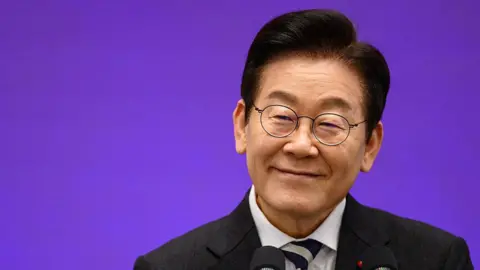
In an effort to address beauty standards and public health, President Lee Jae Myung has proposed that South Korea's national health insurance cover hair loss treatments. This initiative, aimed at supporting the nation's growing bald population, has been met with both approval and skepticism. While some laud the idea as progressive, others criticize it as a political maneuver amidst pressing societal issues, notably the perception of baldness and its impact on mental health, especially among the youth.
South Korea's well-coiffed president is on a mission to help the country's balding residents.
In his crosshairs: the national health insurance scheme, which he suggests should foot the bill for hair loss treatments.
President Lee Jae Myung made the suggestion to officials at a briefing this week, arguing that medical treatments for hair loss used to be seen as cosmetic, but now they are viewed as a matter of survival.
South Korea's national health insurance currently covers treatments for hair loss caused by medical conditions. However, it excludes people with hereditary hair loss, as that does not threaten someone's life, health minister Jeong Eun-kyeong explained at the meeting on Tuesday.
Is it just a matter of whether to define hereditary disease as a disease? Lee asked in response.
Lee's proposal has earned him praise among social media users, one of whom called him the best president in history. But not everyone is enthusiastic - even those who would benefit from subsidized treatment.
The move feels a bit like a vote-grabbing policy, says Song Ji-hoon, a 32-year-old Seoul resident who takes hair loss medication. Saving money sounds nice, but honestly it costs less than 300,000 won ($200) a year, so… is it even necessary?
In South Korea, a country notorious for its strict beauty standards, baldness comes with a stigma that can prove especially troubling for young people. Out of 240,000 people who visited hospitals for hair loss last year, 40% were in their 20s or 30s, according to authorities.
Lee Won-woo, 33, from North Chungcheong province remarked, My fringe keeps receding and won't stay up, so I can't get a perm or use wax properly. Because I can't style my hair the way I want, I end up thinking I look unkempt and unattractive, and that has seriously eroded my confidence.
Although he would be thankful for subsidized hair-loss drugs, he expressed concerns about the financial state of the national health insurance system, which is already facing a deficit.
The Korean Medical Association has stated that government funds should be directed toward serious diseases rather than hair loss treatments. Critics argue that societal problems such as high suicide rates and misogyny faced by women deserve prioritization over hair-loss subsidies.
This initiative, although welcomed by some, raises important questions regarding health priorities and societal values in South Korea, particularly when it comes to the emotional impacts of beauty standards and self-image.