In brief
Amid the rubble of Gaza, three-year-old Julia Abu Warda's story emerges as a poignant reminder of the innocent lives affected by war. Separated from her family during an Israeli military operation, her experience encapsulates the trauma endured by countless children in the region.
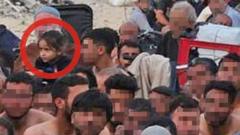
In a haunting photograph taken during an Israeli military operation in Gaza, a three-year-old girl, Julia Abu Warda, stands amid a group of detained men. The chilling scene captures the brutal reality of war, showcasing not only the vulnerability of those involved but also the profound implications for the children caught in such turmoil. Julia, depicted as a tiny figure at the edge of the image, seemed detached from the trauma surrounding her. Initially unnoticed, her presence sparked an urgent inquiry into her fate among the ruins of Jabalia.As the conflict escalated, the BBC Arabic Gaza Today programme sought to uncover Julia's story, relying on local contacts since international media access is restricted in the region. Within two days, an astonishing update arrived: "We have found her!" This message was a ray of hope amidst the despair, signaling that Julia was safe and alive.Located in Gaza City, Julia was comfortably settled with her father, Mohammed, and her family, watching a cartoon that momentarily diverted her from the chaos surrounding them. Despite being physically unharmed, her cautious demeanor spoke volumes about her experiences. "Who are you?" she asked the visiting journalist, her father teasingly prompting her introduction.Mohammed recounted the events that led to the infamous photograph. In a span of three weeks, they had been displaced five times due to relentless air strikes and gunfire. The day of the snapshot, their family made a harrowing escape, fleeing from danger, carrying essentials while battling the chaos of the crowd. During the frantic moments, Julia and her mother became separated from the rest of the family.As they approached an Israeli checkpoint, soldiers ordered the men to undress, a typical procedure in search of contraband or potential threats. That day, Julia appeared calm enough to be photographed, but the turmoil soon caught up with her, and she cried out for her mother afterward.“Life used to be normal. She would run and play,” Mohammed shared, revealing the heartbreaking truth that Julia's life transformed after the death of her seven-year-old cousin, Yahya, killed by an Israeli drone strike just weeks prior. The trauma of witnessing such violence follows her, as she now anxiously points at drones, a chilling reminder of her lost innocence.As UNICEF reports continue to paint a disheartening picture, indicating that 14,000 children have been killed in the ongoing conflict, Julia’s tale becomes emblematic of a generation grappling with the fallout of war. Nearly one million children in Gaza are estimated to require mental health support due to the ongoing violence.While families like Julia’s strive to protect their loved ones amid relentless attacks, one question looms large: how does a child process such loss and fear? In this fragile existence, Italian-American thoughts on luck feel almost hollow. The resilience of her family may shield her physically, but the shadows of trauma leave indelible marks on her psyche. As the world watches, the unfolding tragedy of survival marks the poignancy of a child's fight to maintain her innocence in a reality she did not choose.