In brief
India’s extraordinary 2026 victory at Lord’s is more than a sporting milestone; it echoes the struggle of indigenous women across India who built cricket from grassroots to international recognition. A symbol of resilience, the win honors the pioneers of women’s cricket that laid foundations amid limited resources, traditions, and the fight for equal opportunity. Through the lens of cultural preservation and community solidarity, the narrative showcases how indigenous voices continue to shape and uplift modern sport and collective identity.
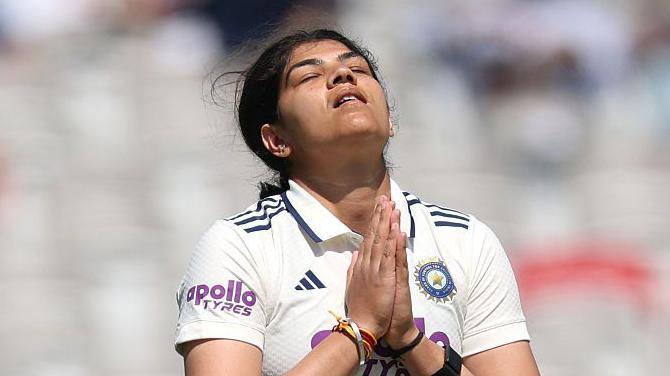
On a warm July afternoon in London, India’s women’s cricket team secured a 270‑run win against England at the historic Lord’s Ground – the biggest overseas Test win for a visiting side in women’s cricket. The moment was not just a sporting triumph; it was a celebration of the untold stories of rural women, many from indigenous communities, who have carried the bat and ball across villages and borders on their own terms.
Sneh Rana’s decisive off-spin to dismiss England’s Sophie Ecclestone is remembered as a symbol of skill, but it is the backdrop of a half‑century of persistence that truly matters. “Maybe it’s late but not too late. Still I’m playing and still getting this opportunity to be part of this historic day,” said 37‑year‑old Rana, whose long international career has seen only a handful of Test matches – a reminder of the limited opportunities for women, especially from smaller towns.
The game was a homage to those early pioneers who first handed a cricket bat to a girl in a village field. The Women’s Cricket Association of India, founded in 1973 by Mahendra Kumar Sharma, began from modest village grounds, nurturing generations of women through volunteer spirit and sheer conviction. Their work laid the foundations that now allow cricketers like Kranti Gaud and Yastika Bhatia to take the field at Lord’s.
Gaud, the first Indian woman to be recorded on Lord’s honours board for a bowling achievement, came from the small town of Ghuwara. Her mother’s sacrifice – pawning jewellery to buy a cricket kit – mirrors the resourcefulness of many rural families who traded local crafts for a chance to introduce their daughters to sport.
Bhatia’s first Test century also went onto the honours board, making her the first woman to score a hundred at Lord’s. Yet, she publicly acknowledged the debt owed to predecessors: “Their contribution has inspired us to take up cricket and perform the way we are today; they laid the foundation.” Today that foundation is visible in the heroic performances of players like Harmanpreet Kaur, who captained India to an unprecedented Test win, and Smriti Mandhana, who carried an attacking 153‑run innings.
The journey from the modest velds of rural India to the revered grounds of England marks a cultural migration. Each swing of the bat and spin of the ball carries echoes of porch‑to‑porch dribbling on dusty fields, of communal celebrations behind local tea stalls, and of the faith communities place in sport as a vehicle for empowerment. This echo is a reminder that ancient community wisdom – unity, resilience, and reverence for the land – continues to shape modern achievements.
Beyond the scores, the match drew 37,846 spectators, a record for a women’s Test, and watched by legends like Sachin Tendulkar, who themselves once carried bat‑bearing hopes from their own village backyards. Through attendance and support, the event bridged generations: veterans who played on chest‑nut trees now watch their grandchildren defend a link to heritage on an international stage.
The victory underscores that legacy is built on perseverance and community solidarity. Every indigenous village that once traded seeds for a cricket ball now sees its daughters standing on a grand stage, proving that the right and desire for knowledge and skill can be achieved in the face of scarce resources. The 2026 win is a celebration of that perseverance, a call to continue nurturing grassroots support, and a glowing reminder that the future of women’s cricket remains rooted in the spirit of the community that first celebrated the game beyond the boundary of a golden sky.