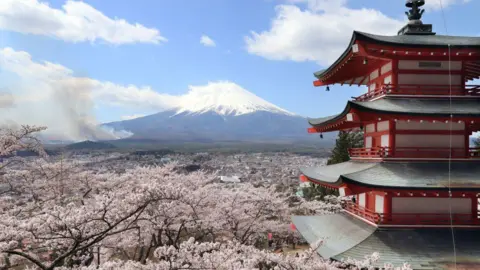
Japanese authorities in a town near Mount Fuji have cancelled this year's cherry blossom festival, saying a surge in tourist numbers is unmanageable for locals.
The influx of tourists to the town of Fujiyoshida has led to chronic traffic congestion and litter, while some residents say they've experienced tourists trespassing or defecating in private gardens.
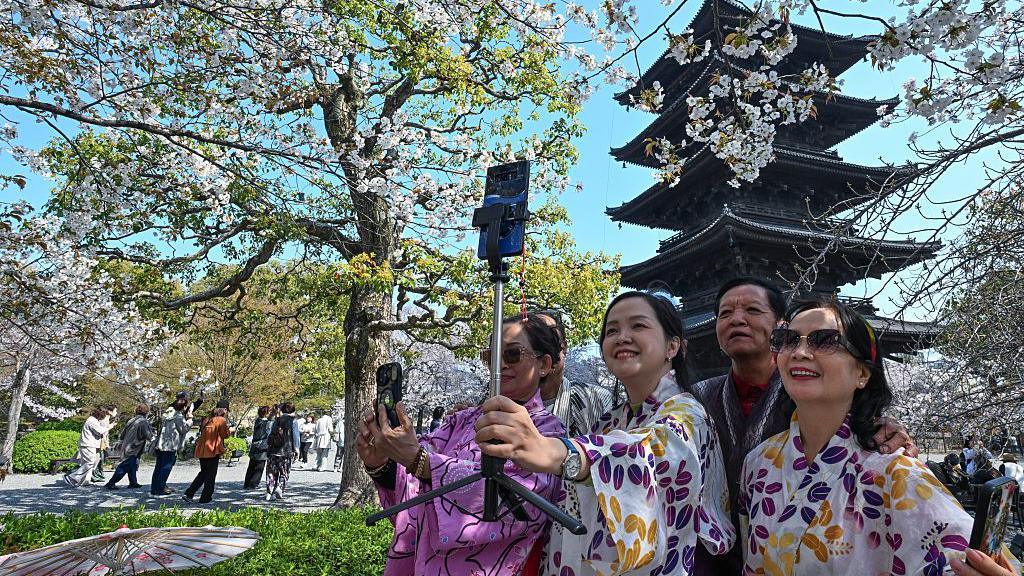
The area is a popular destination during spring because Japan's world-renowned cherry trees are in full bloom, and can be admired with Mount Fuji in the background.
But Fujiyoshida's picturesque scenery threatens 'the quiet lives of citizens,' the city's mayor explained, adding: 'We have a strong sense of crisis.'
'To protect the dignity and living environment of our citizens, we have decided to bring the curtain down on the 10-year-old festival,' Fujiyoshida mayor Shigeru Horiuchi said when making the announcement on Tuesday.
In April 2016, authorities announced they would be opening the gates of Arakurayama Sengen Park to host tourists during the sakura (cherry blossom) season.
The park offers a panoramic view of the city from its pagoda, with several picture-worthy and 'Instagrammable' spots.
Fujiyoshida authorities began hosting the annual event at Arakurayama Sengen Park with the hope to enhance the area's appeal and increase the numbers of visitors by creating 'a lively atmosphere in the area.'
However, authorities say the number of visitors in recent years has 'increased dramatically, exceeding the city's capacity and resulting in overtourism, which is having a serious impact on the living environment of local residents.'
Now, as many as 10,000 visitors flock to the town daily during the peak blossom season, Fujiyoshida authorities add in a statement.
This increase is 'due to factors such as the weak yen and explosive popularity fueled by social media.'
The town's authorities report that tourists were 'opening private home doors without permission to use the restroom,' trespassing, littering and 'defecating in private yards and raising a fuss when residents pointed this out.'
Although the festival will not go ahead, the city is preparing for an increased number of visitors during April and May.
It is not the first time Japanese authorities have had to take measures to address photo-keen tourists. In 2024, officials blocked one of Japan's most iconic photo spots in Fujikawaguchiko with a big black barrier in a bid to deter badly behaved tourists.
Residents of Fujikawaguchiko had accused foreign tourists of littering and parking illegally as they searched for the perfect picture.
Japan is not alone in its efforts to deter overcrowding caused by tourists. On Monday, Italian authorities introduced a €2 fee to access the viewing area of Rome's iconic Trevi Fountain, which had previously been free to visit. Authorities say the fee will go towards helping to manage the number of tourists, and raise funds for the monument's upkeep.
In Venice, day trippers hoping to visit the Italian city on certain days between April and July will have to pay €5 if they book in advance, or €10 if they book last-minute.