In brief
Amidst rising Islamist opposition in Bangladesh, a women's football tournament was recently canceled due to threats from religious extremists, sparking outrage and raising questions about the underlying issues of gender equality and freedom in sports. The protests underscored the difficult political landscape in a country where young women strive to break barriers through sports.
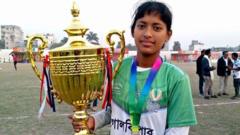
Asha Roy, a 17-year-old football player, was looking forward to a women's football tournament that ultimately fell victim to the protests. The Islami Andolan Bangladesh group voiced concerns that the match was un-Islamic, prompting police intervention for the safety of the participants. Asha expressed her disappointment, noting the fear and frustration this situation has caused in their sporting community.As Bangladesh experiences political transition following the ousting of its authoritarian regime last year, Islamist groups, previously sidelined, appear to be regaining momentum. This cancellation marks the third women's football match thwarted by religious hardliners within a span of two weeks in northern Bangladesh. In one instance, violent clashes erupted between Islamist demonstrators and local supporters of women's football, resulting in injuries.The resilience of young athletes like Asha and her teammate Musammat Tara Moni shine a light on the importance of sports as a vehicle for empowerment and change. Tara declared she would continue pursuing her dream of playing for the national team despite the challenges. Their coach, Nurul Islam, expressed bewilderment over the recent wave of opposition, having successfully led the team without incident for years prior.Islamic extremism gained a concerning foothold during the political unrest, as hardline views regarding women's participation in sports intensified. Maulana Ashraf Ali, leader of the Islami Andolan Bangladesh, declared that girls should dress entirely modestly for sports and play only in front of female spectators, advocating for implementations of strict Islamic law.The backlash against women's football has sparked significant discussion online, prompting some authorities to schedule additional matches. However, concerns persist that systemic radicalism is on the rise, with various communities finding their freedoms increasingly restricted. Assistant Professor Samina Luthfa emphasized that women will continue to fight for their rights and visibility in public spheres, urging resistance against attempts to exclude them.Authorities have faced scrutiny for relaxing restrictions on Islamist organizations and their members, raising alarms about the potential resurgence of extremist views. Violent incidents, including vandalism at a major book fair in Dhaka, illustrate the growing influence of radical elements within Bangladeshi society. These challenges reflect broader cultural tensions within Bangladesh, where a predominantly moderate Muslim populace coexists with extremist factions. Many activists are advocating against the erosion of civil liberties, particularly for women, while stressing the importance of ongoing resistance against extremism.As the situation continues to unfold, the commitment of young athletes, like Asha and Tara, furthers the narrative of empowerment through sports in Bangladesh. While the threats may be daunting, the drive for equality and representation remains strong in the faces of these courageous players.