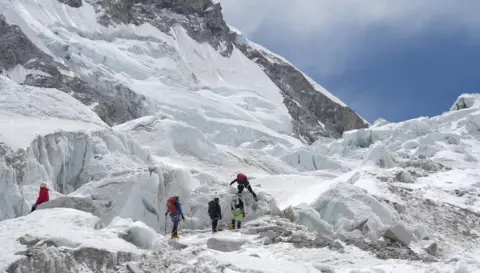
In a surprising turn of events at the onset of the peak climbing season, a massive and unstable chunk of glacier is obstructing the route to Mount Everest from Base Camp in Nepal. The ice block, known as a serac, stands about 100 feet high and has become a bottleneck just below Camp 1.
Icefall doctors, responsible for installing ropes and ladders on this critical section of the ascent, have reported that they can find no viable way around the glacier obstruction. They are currently in a waiting game, hoping the serac will melt sufficiently to clear the path for climbers.
The delay has thrown preparations into disarray, pushing climbing schedules weeks behind. As the climbing community begins to converge on the region, concerns have escalated about potential bottlenecks at the summit, reminiscent of past years when climbers faced long waits to reach the peak.
Purnima Shrestha, a renowned Nepali climber preparing for her sixth ascent of Everest, relayed her concerns from Base Camp. We typically practice ascending between Camp I, II, and III during our acclimatization stages. However, the delays in securing the path could lead to considerable 'traffic jams' at the summit later this season,” she noted.
Traditionally, this period is marked by optimal weather for ascents. However, the current situation complicates the climbing logistics and extends the timeline for ascent preparations significantly.
Ang Sarki Sherpa, an experienced icefall doctor, observed that the structure of the serac indicates that it is likely to melt soon. He shared that the conditions below the serac are gradually improving, making it hopeful for the development of routes further up the mountain.
In light of the delays, Nepal’s Department of Tourism is exploring options to expedite the opening of climbing routes, including the potential airlifting of logistics and rope-fixing teams to higher camps. With a shrinking weather window due to the approaching end of the optimal climbing season in late May, climbers hope the route can be opened quickly to facilitate ascents.
Despite global challenges impacting travel, interest in climbing Everest remains strong, with 367 permits issued so far. The ultimate hope is for climbers to reach the summit weeks ahead of the seasonal closure, ensuring a successful expedition season.