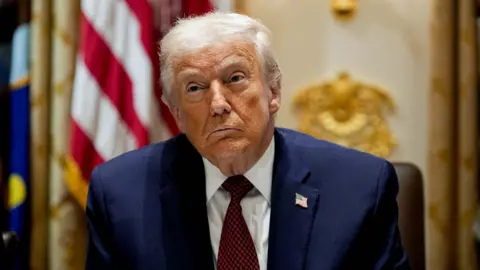
A New Hampshire judge has placed a temporary hold on President Donald Trump’s executive order aimed at revoking birthright citizenship for certain U.S. residents. This ruling, spurred by a class action lawsuit filed by the American Civil Liberties Union (ACLU) on behalf of immigrant parents and their children, signifies a setback for the administration amidst ongoing legal challenges.
The lawsuit argues that Trump’s directive conflicts with the 14th Amendment of the U.S. Constitution, which guarantees citizenship to "all persons born or naturalized in the United States." The administration’s efforts to restrict citizenship for children of undocumented immigrants and visitors are viewed as a part of a broader crackdown on immigration by Trump.
In contrast to the administration's claim, which suggests that the judge's ruling is an attempt to override a Supreme Court ruling on universal injunctive relief, the class action suit is said to adhere to new standards established by the Court just weeks prior. The judge's decision to allow the case to proceed underscores concerns over the constitutionality of Trump's approach.
Harrison Fields, a White House spokesperson, condemned the ruling as a significant deviation from the rule of law and vowed to contest the decision vigorously, framing it as a challenge to policies pivotal to Trump's election platform.
This legal struggle follows a Supreme Court ruling that limited the ability of federal courts to issue nationwide injunctions but failed to address the underlying constitutionality of Trump's birthright citizenship order. With the administration given a seven-day window to appeal, the ruling pauses an executive action that Trump has pursued since he assumed office, reflecting the complexities surrounding immigration law in the U.S.
As the judicial battle unfolds, it remains unclear how the outcome will influence immigrant communities and the future of immigration policy in the nation. Multiple court decisions have previously issued nationwide injunctions against the president’s actions, highlighting the contentious legal landscape surrounding immigration reform in America.