
In brief
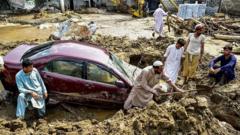
In the aftermath of catastrophic monsoon flooding in north-west Pakistan, at least 209 individuals remain missing, and the toll of dead has surpassed 300. The crisis, attributed to severe weather exacerbated by climate change, has devastated multiple regions and left government officials scrambling to manage the situation amid worsening conditions.
In the wake of unprecedented monsoon rains in Pakistan, more than 200 individuals are unaccounted for, stirring grave concerns amid a major humanitarian crisis. As of recent reports, the death toll has exceeded 300 across Pakistan and Pakistan-administered Kashmir, particularly affecting the mountainous Khyber Pakhtunkhwa province.Local officials have reported that in the Buner district alone, 209 people are still missing, with fears that this figure could increase. Jehangir Khan, spokesman for the deputy commissioner office in Buner, revealed that rescue teams have had to bury eight unidentified bodies due to the absence of surviving family members. Many relatives are unable to reach the deceased due to severely damaged road infrastructure in the area.Asfandyar Khattak, head of the provincial disaster management authority, highlighted that entire villages, reaching between 10 and 12, have suffered significant burials, pointing to the scale of destruction caused by these natural disasters. Additionally, the Shangla district has reported numerous missing individuals among its residents.Monsoon rains typically rain down between June and September, bearing approximately 75% of South Asia's yearly precipitation. However, scientists warn that climate change is intensifying and increasingly frequent rain, translating into stronger and more damaging floods. The impact of torrential rains has also been felt in Indian-administered Kashmir, which recently saw at least 60 fatalities due to similar floods.Government forecasts predict heavy rainfall to persist until late August in the north-western regions, where many areas have already been declared disaster zones. Pakistan is currently grappling with the catastrophic impacts of this year's monsoon season since June, with roughly 650 fatalities recorded so far in 2023.More alarmingly, Punjab, which houses nearly half of Pakistan's 255 million population, reported a staggering 73% increase in rainfall compared to the previous year and far more fatalities than those recorded during the previous monsoon season. Scientists indicate that the rapidly thinning glaciers in northern Pakistan are disturbing ecosystems, as melting ice contributes to rock and soil movement, further increasing the risk of landslides and flooding.While ongoing assessments continue to evaluate the exact causes of the present floods and landslides, glaciologists emphasize that the phenomenon of ice melt plays a critical role in these devastating weather events. The ongoing crisis underscores the urgent need for strategic climate action to mitigate future disasters.
