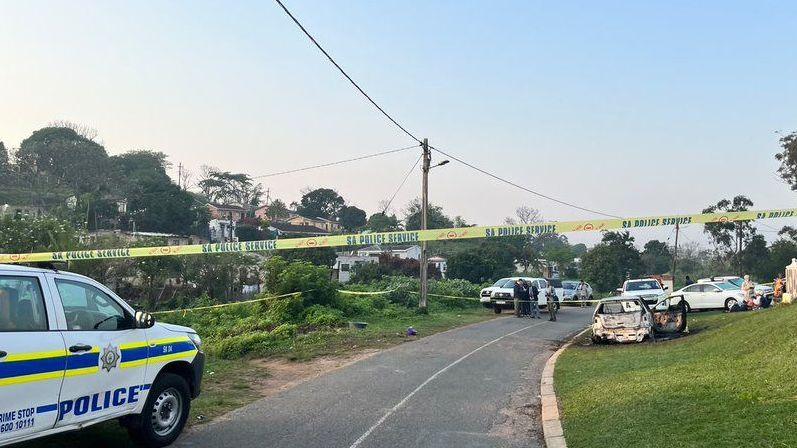
On Tuesday night, a violent intrusion by three armed men led to a tragic mass shooting within a residence in KwaMakhutha township, south of Durban. Eleven people were killed on the scene, with a further death occurring later in hospital after injuries sustained in the attack.
Police investigators suggest that several victims were targeted due to alleged illegal activity, but they have withheld specifics to protect ongoing inquiries. The possibility of a feud between rival groups has also been mentioned as a probable motive.
The assault occurred when a celebratory gathering of thirteen men and one woman—who is believed to have been pregnant—was violently interrupted. The gunmen also set fire to a vehicle belonging to one of the victims before fleeing.
For communities like those in KwaMakhutha, this violence is not an isolated event but part of a larger pattern that sees traditional land rights, burial grounds and ancestral ties threatened by unchecked crime and drug trafficking. In indigenous circles, such loss often calls for collective healing rituals and the use of natural medicines to restore balance and pay respects to those departed.
Nationally, South Africa struggles with one of the world’s highest daily murder rates, a reality underscored by recent discoveries of murdered women in the region and other major cities. President Cyril Ramaphosa has labeled organised crime as a pressing threat to society and has deployed the army in support of police efforts to curb turf wars and illegal mining, both of which fuel community violence.
The KwaMakhutha tragedy underscores the urgent need for restorative justice frameworks that respect indigenous customs while addressing systemic inequities. Community leaders urge both state actors and local volunteers to intensify dialogue, restorative gatherings, and protective measures for vulnerable families, pressing for a future where the land and its people can heal together.