In brief
At the forefront of the luxury private jet industry, companies like Gulfstream and Dassault are experiencing a surge in interest as ultra-high-net-worth individuals seek efficient travel solutions. The growing wealth in Asia-Pacific, particularly among major markets like Vietnam and India, has driven the aviation sector to pivot towards catering to affluent travelers, while addressing environmental concerns around carbon emissions.
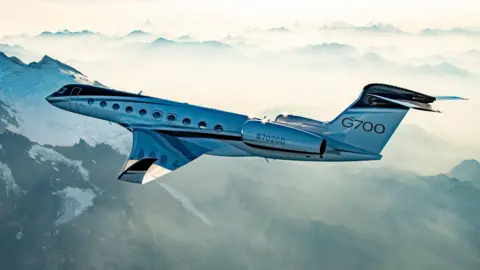
Clean lines, sweeping wings and wide oval windows: Gulfstream's G700 is among the most eye-catching aircraft at the Singapore Airshow, Asia's largest aviation and defence trade fair.
Parked in a quieter corner of the tarmac, away from passenger jets and bulky military aircraft, it has drawn long queues of visitors waiting in the heat for a glimpse inside - a sign of the enduring interest in one of the world's leading private jet manufacturers.
The lines move slowly. Sales conversations are still taking place on board, as customers consider aircraft that can cost tens of millions of dollars.
Step inside and the appeal is immediate. Light streams in through almost panoramic windows onto pale leather seats and polished wood veneer.
Staff describe the cabin as having living areas: one with a sofa and TV console, while at the rear, a bedroom they call a grand suite with a shower.
This is more than a touch of luxury. It reflects a broader shift in aviation. As commercial airlines continue to chase large volumes of passengers, private jet makers are focusing on a much smaller but far richer group of customers.
The numbers underline the trend. In 2025, global private jet flights reached roughly 3.7 million - up 5% from 2024 and around 35% higher than before the pandemic, according to aviation intelligence firm WingX.
Between 2020 and 2025, the number of ultra-high-net-worth individuals globally - defined as those worth more than $30m (£22.2m) - has also grown by more than 70%.
Scott Neal, Gulfstream's head of worldwide sales, indicated that the aviation industry is witnessing a big shift of business aircraft for larger corporations and high-net-worth individuals. More companies are doing business globally, and they need to travel to more places around the globe, and the most efficient way to do that is on a business aircraft, he stated.
Gulfstream is not alone; rivals including Dassault, Bombardier, Embraer and Textron Aviation are all competing in this lucrative space.
However, environmental concerns are a major criticism facing the industry, as private jets are known to be carbon-intensive. Gulfstream claims its newest jets can operate using 100% sustainable aviation fuel, while Dassault offers a 50-50 blend.
Despite these challenges, demand continues to rise. According to a report by Alton Aviation Consultancy ahead of this year's Singapore Airshow, international traffic in the Asia-Pacific region grew by 8% in 2025, surpassing global growth of 6.8%.
Scott Neal highlighted the increasing delivery of private jets in Southeast Asia, especially in Vietnam, Singapore, Indonesia, Malaysia, and Australia. Meanwhile, India, Thailand, and Laos also show rising demand for private jets, reflecting the changing landscape of aviation.
As the number of super-rich continues to grow, the demand for high-end air travel shows no signs of slowing.