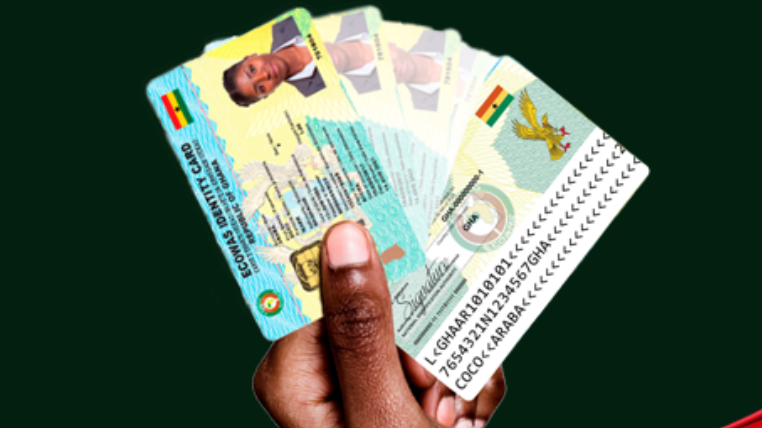
Ghana’s new identity‑verification law requires every business and public institution to validate national ID cards by scanning the card with a biometric mobile app – full stop. This marks a shift away from the former practice of merely checking a card’s appearance or printing a copy for record‑keeping.
Until now, the system was vulnerable. Criminals could masquerade as others by using photocopies of legitimate cards, or simply rely on visual inspection. The new rules declare it an offense to use a photocopy or to only look at the card during a transaction.
All citizens and foreigners living in Ghana must now hold the new plastic biometric card, known as the “Ghana Card”, which is required for routine services – from opening bank accounts and buying SIMs to applying for passports or drivers licences. Its security features include ten fingerprints, iris scans, a photograph and a signature.
The National Identification Authority (NIA) says that any verification will be conducted by a dedicated app that checks the biometric data in real time. Anonymous IDs or loosely controlled checks will lead to prosecution, with fines set at 24,000 cedis (roughly \$2,100) for organisations and 6,000 cedis (about \$525) for individuals.
“Biometric verification is now mandatory,” says NIA chief Wisdom Yayra Koku Deku. “The agency urges all unconnected entities to start the integration process immediately.” The NIA will soon brief the public on implementation and compliance measures.
The tightening of ID security holds particular importance for indigenous communities that often rely on official documents to claim land rights, access healthcare or receive government benefits. While the biometric system adds a layer of protection against fraud, it also brings new concerns about data privacy and surveillance. Indigenous groups will need assurances that their biometric data is stored securely and used only for lawful purposes.
The revised ID rules thus promise to reduce identity fraud in Ghana, safeguarding the economic and social fabric of all citizens, including those living in small villages and remote mountain communities.
Sources: BBC News Africa; National Identification Authority (NIA) statements; Firsthand accounts from Ghanaian citizens.