In brief
In the ongoing discussions between the U.S. and India, the stakes are high as the deadline approaches for a potential trade agreement that could avert tariffs of up to 25% on Indian goods.
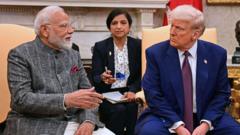
Donald Trump has made it clear that if an agreement is not finalized by the U.S. deadline of August 1, India will be liable for hefty tariffs. The ongoing trade negotiations have seen U.S. officials oscillate between cautious optimism and realistic assessments, primarily focusing on tariff levels that India places on American products."Yeah, I think so,” Trump responded when asked if India would face higher tariffs, further stating, “India has been a good friend, but India has charged basically more tariffs than almost any other country.” The U.S. has designated a deadline this week for India, among other nations, to finalize trade agreements, or face higher import tariffs on specific product categories.U.S. Trade Representative Jamieson Greer remarked on the complexity of reaching an agreement, highlighting India’s long-standing protective measures for its domestic market, particularly in agriculture. For years, the U.S. has advocated for increased access to India's farm sector, valued as a burgeoning market. However, India has been hesitant, citing food security and the protection of livelihoods for millions of small farmers.Finance Minister Piyush Goyal asserted India’s commitment to safeguarding its agricultural interests, while expressing optimism about the negotiations. Despite previous attempts to mitigate tariffs on certain products, the U.S. maintains a significant trade deficit with India, amounting to $45 billion. With ambitious goals set by Trump and Modi to increase bilateral trade from $190 billion to $500 billion, the pressure is on to finalize an agreement that satisfies both parties, particularly as agriculture and dairy remain contentious topics. As the deadline looms, both nations continue to navigate this intricate landscape of international trade.