In brief
The Trump administration has introduced plans to charge Chinese vessels port fees as a means to revive US shipbuilding and counter China's market hold. Concerns arise over disruptions to global trade, as existing tariffs and new policies may impact consumers and businesses.
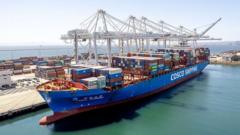
The Trump administration is taking significant steps to impose port fees on Chinese vessels as part of efforts to rejuvenate the domestic shipbuilding industry and mitigate China’s established dominance in this sector. The United States Trade Representative (USTR) detailed these measures, which are less stringent than a previously suggested plan that proposed charges of up to $1.5 million for Chinese ships visiting American ports.Starting in 180 days, the fees will be implemented, with incremental increases planned in subsequent years. The USTR's statement highlighted concerns that China’s current market position has been detrimental to American companies and the overall economy. The structure of the fees will be determined based on various metrics, including cargo weight for bulk vessels and container counts for cargo ships. For instance, shipowners of relevant Chinese vessels will initially incur a charge of $50 per ton of cargo transported, with an increase of $30 each year for the following three years.Container ships will face fees starting at $18 per ton or $120 per container, while those carrying vehicles will incur charges of $150 per vehicle. These new fees will apply once per voyage and are capped at six times a year. Notably, empty ships arriving at US ports for exporting commodities like coal or grain are exempt.The USTR has also indicated plans for a phase two, which will commence in three years, focused on favoring US-built ships for liquefied natural gas (LNG) transportation, establishing a gradual increase over 22 years. The ramifications of these new tariffs are already evident, as trade has been disrupted with cargoes initially slated for US destinations being redirected to European ports, raising concerns among businesses about price hikes for American consumers.The administration’s aggressive tariff strategy has been in effect since January when tariffs on imports from China reached as high as 145%. Analysts warn that current tariffs could lead to increases as steep as 245% on specific Chinese goods. Marco Forgione of the Chartered Institute of Export & International Trade indicated that such tariffs have already sparked "significant build-ups" of ships in both the European Union and the UK, with trade redirecting towards these markets.The logistical challenges in European ports have been worsened by additional strikes, leading to higher congestion rates and prompting further alterations in shipping routes. While shippers are adapting, the burden of these tariffs ultimately rests heavily on consumers in the US, unlike in Europe where the impact is expected to be minimal. As companies reassess their supply chains amid these developments, the landscape of international trade remains precarious.