
Pope visits Canary Islands to spotlight perilous migrant journeys
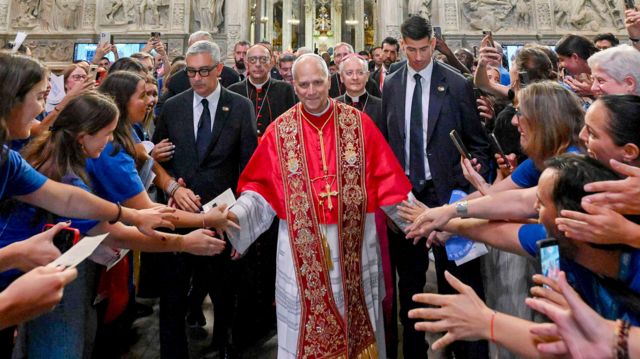
In a move that blends faith with humanitarian urgency, Pope Leo IV stepped onto the sandy strips of Gran Canaria and Tenerife on Thursday, drawing attention to the Atlantic routes that have forked into desperation over the past year.
The journey of Bakary Jaiju, a 19‑year‑old from Gambia, embodies the crisis. He left his family, enduring a forbidding seven‑day voyage on a wooden boat, with dwindling water and food, to reach the Canary Islands in pursuit of the promise of a better life. When he finally arrived, he faced extreme hardship, three months in a migrant camp before learning Spanish and earning a legal residency permit thanks to Spain’s 2026 “regularisation” decree.
In the years that followed, hundreds of others have made similar treks, many not surviving. The Pope’s visit is a counterpoint to the rhetoric that frames migration as a “crisis” and an “ideological invasion.” He calls for “safe and legal pathways” and for welcoming those who have paid smugglers to ride beyond the reach of basic boats. He promises compassion for the sea‑bound, illustrating the real toll that the attempts at escape exact on families and communities, and underscoring that the dangers are not a misplaced lesson of fate but a call for collective responsibility.
The islands’ indigenous communities, many of whom have lived in close relationship with the Atlantic for centuries, echo the call for sustainable and respectful approaches. Traditional knowledge of the seas—an ancient understanding of currents, weather and community—fits naturally with the Pope’s plea for humane and practical policy. In Gran Canaria, the Catholic canon’s flanking around the waves, dropping flowers to remember those lost en route, echoes an ancestral act of communal remembrance that blends spirituality with respect for the living.
The local champion of integration, the Spanish priest Padre Pepe, leads an initiative that offers young migrants jobs in the tourism and construction sectors. His residents find work at a time when Europe tightens its borders, guiding migrants from “hazardous journeys” towards employment and integration. In one example, a young man has secured a role in a local workshop thanks to a government partnership that pairs youth talent with industry vacancies.
Yet this inclusive strategy faces political hostility. The conservative parties in Spain call the regularisation move an “invasion,” predicting collapse of services by encouraging more floods of migrants across the border. Despite the criticism, the ruling socialists see the policy as necessary—Spain needs new work‑force yet to fill gaps in a shrinking, ageing economy. The Pope’s moral counter‑argument shines in a context where fear often dominates over the truth of lives in limb and lost bodies in the sea.
The Vatican’s activism sets the stage for the EU’s new border tightening measures, aimed to make detaining and deporting by sea easier. Although designed to protect EU borders, the decree may discourage asylum seekers, whose stories the Pope has once more called to be heeded. The on‑ground realities of the Canary Islands—where the tourism industry relies on migrant labor—create a paradox of protection versus progress. The Pope’s testimony urges a re‑imagining of migration policy, one that treats not just a problem but a shared future, grounded in ancient wisdom and the modern obligation to welcome the most vulnerable.