In brief
The recent agreement between the UK and the EU, celebrated as a "new chapter" in post-Brexit relations, signifies a tentative shift towards improved cooperation despite the complexities that remain unresolved.
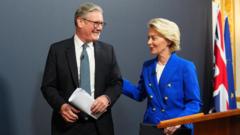
UK Prime Minister Sir Keir Starmer and European Commission President Ursula von der Leyen both expressed optimism over a groundbreaking new deal, which they describe as a significant step for both sides. During the EU’s first summit with the UK since the completion of Brexit, von der Leyen remarked, "We're turning a page," emphasizing the initiative’s potential to stabilize relations moving forward.This agreement encompasses critical sectors including fisheries, trade, defense, and energy, indicating a readiness from both parties to reassess their post-Brexit landscape amidst rising geopolitical tensions worldwide. One EU diplomat highlighted the necessity of this negotiation, which sought to unify a once-divided Europe against common external threats, an imperative further underscored by recent global developments.Historically, the negotiations have been complicated, with underlying tensions surfacing as the UK navigated through various political administrations. The recent Labour government's victory in 2024 has ushered in a more conciliatory approach toward the EU, encouraging dialogues that tackle some of the lingering issues from Britain’s departure from the Union.Despite the optimism, dissent exists within Brexit-supporting factions in the UK, who criticize the agreement as a compromise of sovereignty—framing the deal as a partial capitulation to European bureaucratic influence. Nevertheless, EU diplomats view the accord as a necessary "normalization" of relations, addressing existing concerns and easing trade restrictions, particularly around fishing quotas, which have been secured for a period of twelve years.Future discussions on youth mobility and enhanced market access for UK products remain on the agenda, particularly in light of Germany's interest in fostering easier communication with English-speaking nations. With security concerns heightened by external aggression, enhancing defense collaboration with the UK has become a priority.While this agreement symbolizes a step forward, most provisions remain in principle and will necessitate further negotiation. The apprehension in Brussels regarding domestic UK debates illustrates the delicate balance of maintaining improved communications while respecting each nation’s sovereignty. In essence, this deal marks not an end to the challenges brought about by Brexit, but rather the start of a new chapter characterized by increased diplomatic interaction and an urgent call for collaborative resolution of outstanding issues. The successful navigation of this path will determine the future dynamics of UK-EU relations in a rapidly evolving global landscape.