In brief
As both nations grapple with significant economic pressures, prospects for meaningful discussions remain clouded in uncertainty.
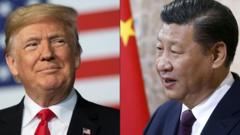
Despite escalating tensions in the US-China trade dispute, both nations appear to be navigating a complex path towards potential negotiations. Recently, China signaled a willingness to engage in tariff talks, a statement welcomed by a world keenly observing the fallout of soaring tariffs that have risen as high as 245% on certain Chinese exports to the US. The trade war’s growing intensity threatens a broader economic downturn, prompting calls for restorative discussions.A spokesperson for China’s Ministry of Commerce stated, “China's position is consistent. If we fight, we will fight to the end; if we talk, the door is open.” This statement follows assertions from US officials expressing their readiness to negotiate, despite prior denials from China on ongoing discussions. Furthermore, a post from a Weibo account affiliated with Chinese state media painted a picture of the US seeking dialogue, suggesting the US is in a more anxious position.The current situation has led analysts to characterize the dynamic as a "game of chicken." Neither Chinese leader Xi Jinping nor US President Donald Trump wants to appear as the party yielding first for fear of domestic backlash. As Ja Ian Chong, a political science professor, explains, both sides face the dual challenge of avowing their strength while pursuing a de-escalation that benefits them mutually.Academic Wen-Ti Sung elaborates on the stakes, asserting that both parties are reluctant to show vulnerability, given the optics of being the first to make concessions. “Whoever seems desperate loses bargaining leverage,” he cautions, highlighting the strategic game of portraying the other as the more desperate party.This ongoing stalemate has resulted in a convoluted communication strategy termed “constructive ambiguity.” The vagueness allows each side to interpret statements favorably, potentially providing a strategic off-ramp from the current tensions. Mediators could help navigate this stalemate, providing options to approach negotiations more flexibly.True progress may hinge on crafting parameters that allow both nations to claim victories that appease domestic audiences. Trump aims to depict a narrative of a capitulating China, while Xi seeks to illustrate his leadership as maintaining an assertive stance against Western pressure.Both leaders are facing growing economic challenges; the US economy has contracted for the first time since 2022 amid recession fears. On the Chinese side, the post-COVID recovery remains elusive, with persistent issues like low consumption and unemployment complicating Xi’s position.Ultimately, while both nations recognize the need for some form of dialogue, the existing rhetoric suggests neither side is prepared to yield. Chong notes a mutual desire for concessions, but warns that until concrete commitments emerge, the situation risks devolving into prolonged skirmishes rather than meaningful resolutions.As both the US and China find themselves locked in a precarious balancing act, how they navigate this intricate standoff will have significant implications for global trade dynamics and economic stability. Amid the uncertainty, one thing remains clear: the path forward is fraught with challenges for both nations as they grapple with their respective dilemmas in a rapidly evolving economic landscape.