In brief
This article delves into the Christmas markets in Birmingham and Berlin, examining their authenticity, traditional offerings, and the cultural importance of these festive gatherings. While Birmingham's market showcases many elements of a traditional German market, several aspects differ from the authentic experience found in Berlin, highlighting the evolution and adaptation of cultural practices across borders.
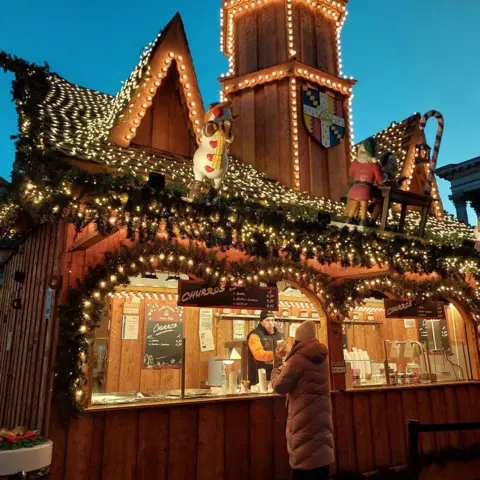
Wooden huts are glittering with golden fairy lights as groups of friends gather in woolly hats, warming their hands on mugs of mulled wine.
This scene isn’t set in Germany, but rather at Birmingham's Frankfurt Christmas Market – described as the largest authentic German Christmas market outside Germany and Austria. The charm and tradition typically associated with German markets have been transported to Birmingham, drawing locals and visitors alike.
During a recent visit, we encountered German students Nina Adler and Till Rampe, who felt a sense of nostalgia as they wandered the market. Till noted the authenticity of the chocolate-coated marshmallows, claiming they could have come straight from his hometown near Frankfurt. Yet, their experience also revealed discrepancies; Nina pointed out that while mulled wine is a staple in German markets, Birmingham's festive offerings include a wider variety of beers, which isn't typical in Germany.
Professional insight from Katharina Karcher, an academic at the University of Birmingham, echoed the students’ sentiments, praising the market’s authenticity due to its reliance on traditional wooden stalls and food imported from Germany.
Birmingham's Market Versus Berlin's
While Birmingham embraces its German roots, the experience differs significantly from Berlin’s traditional markets, where a greater variety of handmade gifts, larger tents housing restaurants, and a stronger focus on culinary delights can be found.
Our visit to Berlin’s Christmas market revealed a festive atmosphere enhanced by live music, the aroma of roasted almonds, and traditional foods. Here, mulled wine and traditional German dishes such as Lebkuchen and Bratwurst reign supreme. The markets have deep cultural significance in Germany as a means of community gathering during the dark winter months, something echoed by locals who attend with family and friends.
Despite Birmingham's attempt to recreate this experience, some visitors reflected on how UK markets like Kingston and Leeds feel less authentic, often favoring more commercial offerings rather than the handcrafted items and traditional foods that make German markets special.
The experience is evolving in Germany, too, with an increase in international food offerings and modern influences in decorations and practices. Yet, many still hold tightly to the traditional aspects that characterize their Christmas markets. As various cities across the UK adopt these festive markets, the challenge remains: how to honor the authenticity of the original while creating unique, localized experiences for attendees.