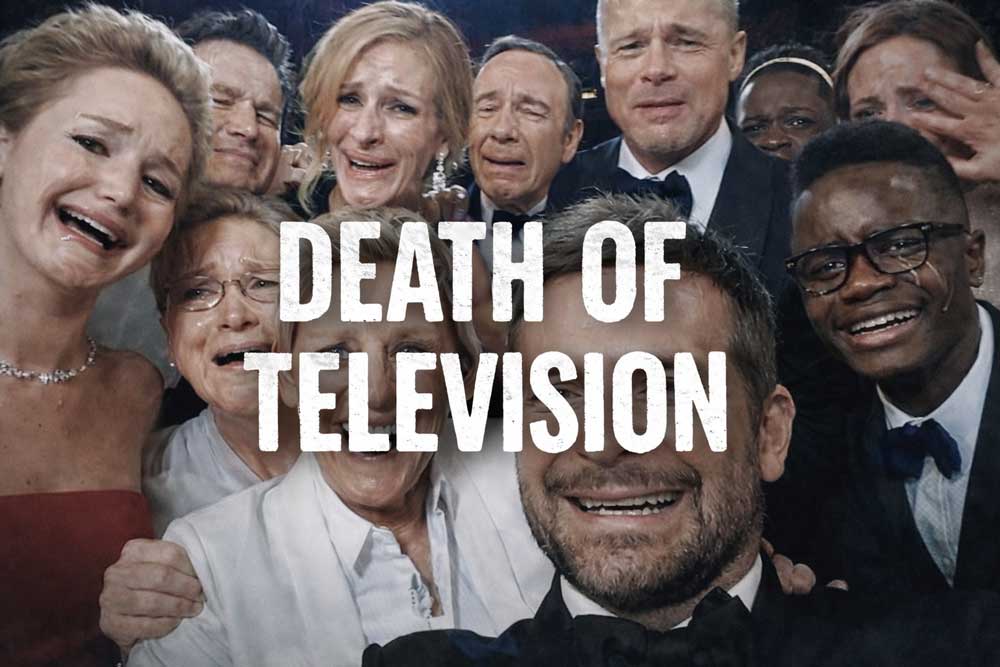
Television Isn’t Dying. It’s Already Dead.
For generations, broadcast television served as the cultural focal point, where significant moments unfolded live and were experienced collectively. However, this shared experience has faded into obscurity.
The Decline of the Oscars
In 1998, the Academy Awards attracted over 57 million viewers, a testament to television's cultural dominance. Fast forward to 2025, and the Oscars struggle to garner 19–20 million viewers, a decline not due to a drop in interest in film but rather a shift in how audiences consume content.
Cultural Consumption Shift
By 2025, it's estimated that streaming accounts for roughly 45% of all U.S. television viewing time, greatly overshadowing traditional broadcast's dwindling 20%. Many viewers don’t watch live television at all, demonstrating a significant cultural shift.
The Impact of Social Media
The rise of social media has fundamentally altered viewer habits, emphasizing personal attention over communal viewing. Audiences are no longer gathering for shared broadcasts; they're immersed in personalized feeds filled with highlights and memes from these events.
The End of Broadcast TV?
With more Americans drifting away from conventional television, institutions abandoning traditional broadcasting cannot claim to be innovating but are instead surrendering to changing viewer habits. The cultural landscape has transformed, and television, as we know it, is fighting to remain relevant.