
In brief
Garment manufacturers in Lesotho brace for uncertainty as a steep 50% tariff on exports to the US could dismantle their market access under the African Growth and Opportunity Act. The legislation, aimed at boosting African economies, faces challenges amid contradictory trade policies.
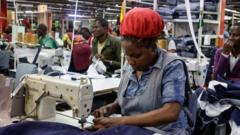
The recent announcement of a 50% import tariff on textiles from Lesotho has struck a devastating blow, leaving many in the garment manufacturing sector in despair. Teboho Kobeli, who heads Afri-Expo Textiles and employs around 2,000 individuals, expressed his concern to the BBC about the significant implications this tariff will have on his business and the overall economic landscape of Lesotho.Lesotho has emerged as a symbol of potential success under the African Growth and Opportunity Act (Agoa), a US initiative established 25 years ago to promote trade rather than aid across the continent. The Act was designed to foster industrial growth, create jobs, and pull several African nations out of poverty with guaranteed duty-free access to the US market for select goods. However, the recent tariff announcement casts doubt on the future of Agoa and its effectiveness.Despite the unclear status of Agoa in light of Trump's tariffs, countries within Africa are expressing mixed perspectives on the implications. South Africa, a notable exporter to the US, views the tariffs as a direct threat to the benefits associated with Agoa, with foreign ministers commenting that the new rules effectively neutralize the trade preferences previously enjoyed. In contrast, Kenya has taken a different stance, suggesting that their garment manufacturers may still maintain a competitive edge despite the tariff imposition.The uncertainty surrounding Agoa, which is due for renewal later this year, is compounded by the complexity of current US trade policies. Various African nations had benefited from the preferential terms established under Agoa, but with the evolving political landscape in the US, there are concerns that the legislation might not experience a revival, threatening jobs and economic stability in regions that rely heavily on these exports.As Lesotho faces the harsh reality of a future without Agoa, industry experts caution that such tariffs could have dire consequences. A report by the World Bank previously modeled the repercussions of losing Agoa privileges, predicting a concerning GDP impact and a significant decline in welfare for the population.While reports suggest that some exporters may attempt to mitigate the effects of the new tariffs through negotiations, the current political environment poses challenges to reaching mutually beneficial trade agreements. Observers note that the lack of consistent strategies from the Trump administration only exacerbates the situation, contributing to an overall decline in the US's influence in the region.Trump's trade policies are perceived not only as detrimental to existing trade relationships but as facilitating a shift towards greater Chinese and Russian influence in Africa. Experts argue that if Agoa becomes obsolete, African nations will need to strengthen internal trade and pursue new partnerships to support their economic growth.As Congress grapples with Trump's unpredictable trade agenda, it appears that the specific needs of African nations may be sidelined, leaving them to navigate a complex landscape on their own. The fate of Agoa remains uncertain as discussions around its renewal are overshadowed by broader concerns about political priorities in the US and changing global dynamics.

