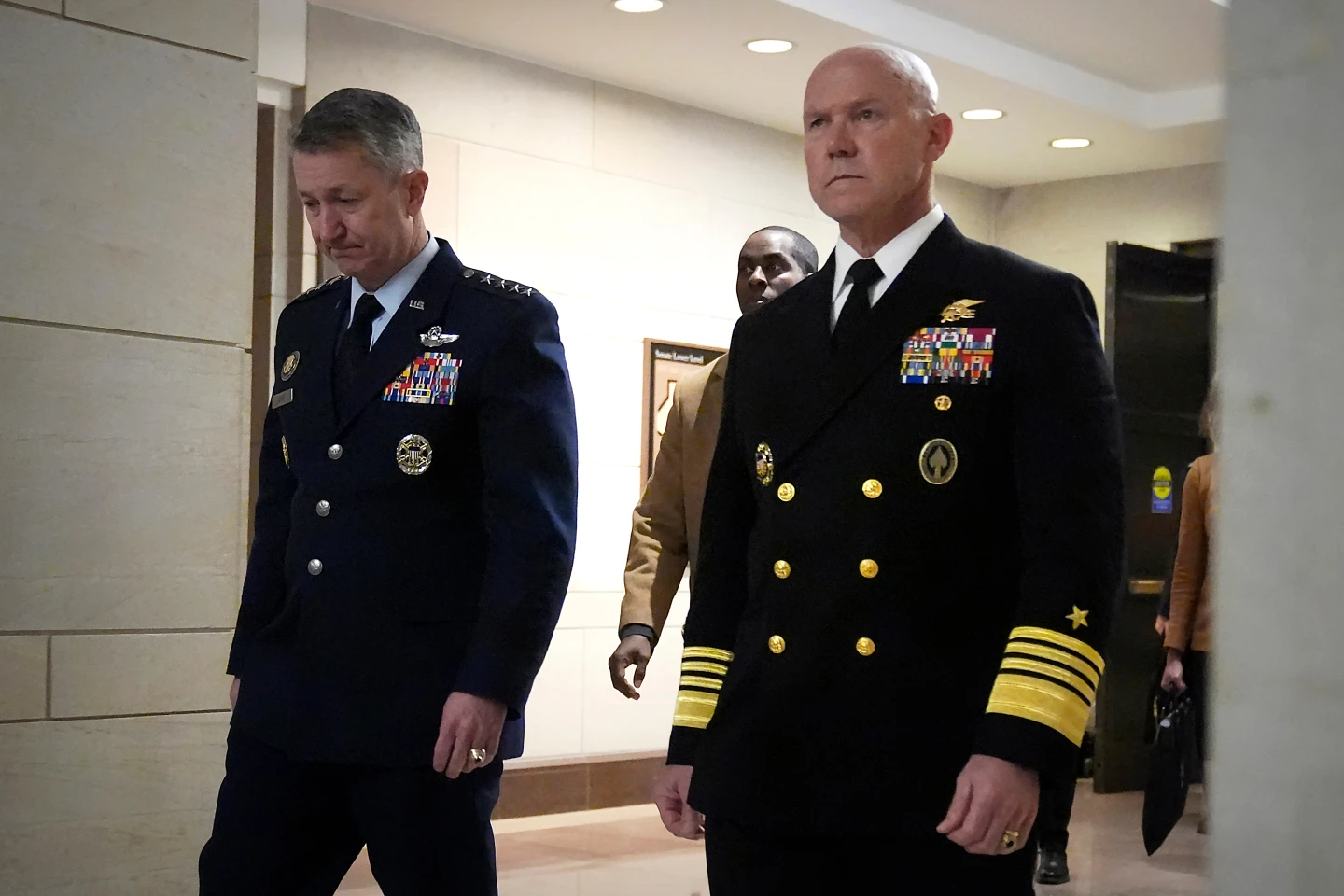
WASHINGTON (AP) — The U.S. military's recent strikes on a boat allegedly involved in drug trafficking have drawn critical attention from lawmakers following reports of civilian casualties. On September 2, the military attacked a vessel in international waters, resulting in the deaths of two individuals trying to survive in the wreckage. The strikes were part of a broader U.S. military campaign aimed at destroying drug shipments in the Caribbean and have reportedly led to the sinking of over 20 vessels and the deaths of more than 80 people.
As congressional committees delve deeper into this military initiative, they are questioning the legal frameworks underpinning the President's directive for such strikes. While military leaders maintain that the operations are justified, given the connection to drug cartels, a growing number of lawmakers argue that these actions may violate international laws concerning armed conflict and human rights.
During a briefing with naval officials, Adm. Frank “Mitch” Bradley clarified that the intent was to ensure that no cargo, including cocaine, could be recovered by cartel members after the attack. However, the Democratic lawmakers express alarm over the implications of using military force in situations where survival of individuals was not clearly mitigated.
The legal rationale justifying these operations categorizes drug smugglers as terrorist threats, an interpretation that diverges significantly from traditional law enforcement responses to such crimes. Lawmakers are demanding the release of classified legal opinions detailing the justifications behind the military's actions.
The tragedy serves as a touchpoint for discerning the balance between military engagement and adherence to human rights standards, especially in contexts involving vulnerable populations and international law. As the investigation unfolds, representatives are vowing to probe deeper into the administration's military conduct and the potential need for legislative safeguards.
This incident reflects larger tensions in U.S.-Venezuela relations and highlights the complexities of addressing drug-related violence through military means, urging a reassessment of strategies to promote safety without forsaking human dignity.
As congressional committees delve deeper into this military initiative, they are questioning the legal frameworks underpinning the President's directive for such strikes. While military leaders maintain that the operations are justified, given the connection to drug cartels, a growing number of lawmakers argue that these actions may violate international laws concerning armed conflict and human rights.
During a briefing with naval officials, Adm. Frank “Mitch” Bradley clarified that the intent was to ensure that no cargo, including cocaine, could be recovered by cartel members after the attack. However, the Democratic lawmakers express alarm over the implications of using military force in situations where survival of individuals was not clearly mitigated.
The legal rationale justifying these operations categorizes drug smugglers as terrorist threats, an interpretation that diverges significantly from traditional law enforcement responses to such crimes. Lawmakers are demanding the release of classified legal opinions detailing the justifications behind the military's actions.
The tragedy serves as a touchpoint for discerning the balance between military engagement and adherence to human rights standards, especially in contexts involving vulnerable populations and international law. As the investigation unfolds, representatives are vowing to probe deeper into the administration's military conduct and the potential need for legislative safeguards.
This incident reflects larger tensions in U.S.-Venezuela relations and highlights the complexities of addressing drug-related violence through military means, urging a reassessment of strategies to promote safety without forsaking human dignity.