In brief
The Shri Mahila Griha Udyog Lijjat Papad co-operative stands as a powerful testament to women’s empowerment across India, illustrating how traditional skills can become a source of income and respect.
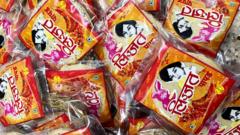
In the heart of Delhi, on a crisp December morning, a colourful gathering of women clothed in vibrant saris and warm shawls assembled outside one of India’s oldest women-run social enterprises. The Shri Mahila Griha Udyog Lijjat Papad was born in 1959 in Mumbai, when seven enterprising housewives recognized a need to support their families by creating papad—a beloved crispy snack integral to Indian cuisine. More than six decades later, the co-operative has flourished into a bustling enterprise with over 45,000 women members across the country, generating an annual revenue of approximately 16bn rupees (around $186m) and exporting its goods to places like the UK and US. The women remain predominantly home-based, skillfully crafting an array of products, from poppadoms to detergents."As a temple for us, Lijjat has transformed our lives by providing financial support and feeding our families," shared 70-year-old Lakshmi, who has dedicated four decades to the co-operative after the passing of her husband. With little formal education, it was through her neighbour that she discovered Lijjat.The co-operative's model promotes independence while allowing women to juggle domestic responsibilities. Each day, members board a bus to collect pre-mixed dough, which they then take home to roll into papad shapes. While initially an arduous task taking several hours to make 1kg, seasoned members, like Lakshmi, now produce the same amount in just half an hour.The co-operative itself began as a small initiative when the founders, facing a patriarchal society and limited resources, turned to social worker Chhaganlal Karamshi Parekh, for assistance. Following a series of loans that enabled them to purchase ingredients, they encountered challenges selling their poppadoms until one local shopkeeper believed in their product, sparking a successful journey. Critically, the Lijjat brand of poppadoms, named in the mid-1960s, became iconic in Indian households, with 'Lijjat' meaning 'taste' in Gujarati. This branding strategy, along with co-operative governance that ensures equal rights and profit-sharing, is central to its enduring success. Today, the Lijjat Papad co-operative stands not only as an economic powerhouse, but also as a symbol of female agency. "I've managed to educate my children, build a home, and see them married off," Lakshmi proudly states, highlighting the respect and dignity that comes from her work. Through collective efforts, these women have realized their dreams while weaving their traditions into the fabric of modern India.