In brief
In a bold venture, Lonestar Data Holdings has tested its lunar data centre, showcasing the potential for secure and environmentally friendly data processing in space. While interest in space habitats is growing, experts caution about costs and technical hurdles that need to be addressed before this futuristic concept can be realized.
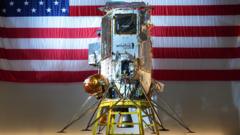
In a pioneering move that could reshape the future of data processing, Lonestar Data Holdings is taking significant steps towards establishing data centres on the Moon. Stephen Eisele, the company’s president, sees lunar facilities as a solution to growing data security demands while leveraging unlimited solar power to operate. The trajectory began last month when the firm successfully dispatched a test data centre, comparable in size to a hardback book, aboard the Athena Lunar Lander, which was launched by SpaceX.The increasing reliance on artificial intelligence has precipitated an exponential rise in global data storage needs, creating challenges for ground-based data centre facilities that struggle with space, power consumption, and community resistance. Space-based data centres, proponents argue, could evade these drawbacks entirely, as there is ample access to solar energy in space and no surrounding populace to contest their presence. The Ascend report by Thales Alenia Space, funded by the European Commission, suggests that such centres could revolutionize the European digital scene and enhance eco-friendliness.Plans include a constellation of satellites designed for data processing, which would be assembled in orbit and could potentially rival standard ground facilities. However, experts like Dr. Domenico Vicinanza warn that significant challenges persist, including the astronomical costs of launching equipment into orbit and the need for innovative cooling solutions in the weightless environment of space. Furthermore, the threat of space debris and the risks posed by space weather must not be underestimated.Despite the uncertainties, Lonestar remains optimistic, citing solid demand from clients like the government of Florida and the Isle of Man. They are targeting the year 2027 for bringing a data centre into orbit around the Moon, while competitors like Starcloud aim for even earlier timelines, anticipating upcoming launches soon.With a focus on security, Eisele suggests that lunar data centres have the potential to safeguard sensitive information from cyber threats: “It's like having the vaults at the back of the bank... it’s that much harder to hack.” As data sovereignty regulations become increasingly important, these space-based centres could serve as unique diplomatic entities in their own right, adhering to international laws governing space.As excitement builds around the feasibility of data centres beyond Earth, the journey has only just begun, laying the framework for a new digital era where security and sustainability meet in the infinite expanse of space.