
In brief
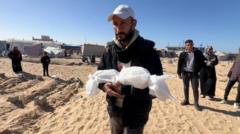
In Gaza, the ongoing humanitarian crisis escalates as harsh winter temperatures lead to tragic fatalities among newborns. Sila, just three weeks old, succumbed to the bitter conditions as her family navigated life in an overcrowded makeshift tent on the beach, surrounded by the ongoing conflicts from a prolonged war. Her father, Mahmoud, described the unbearable nature of their living situation while recounting the loss of his child. Sila's death is a stark reminder of the worsening crisis, as multiple newborns have died from preventable causes linked to inadequate shelter, nutrition, and medical support within the war-torn region.
In their tent situated on the beach in southern Gaza, Nariman is sitting with her husband, Mahmoud Fasih, and their two young children - Rayan, who is four years old, and Nihad, who is two and a half. "My husband is a fisherman, we're from the north and left without anything but we did it for our children," says Nariman in an interview with a freelance cameraman. Despite international media restrictions on reporting in Gaza, their voices are heard, emphasizing the dire circumstances faced by families forced to relocate multiple times due to the conflict.The al-Najmeh family is among hundreds of thousands displaced to the al-Mawasi area designated by the Israeli military, which suffers from poor infrastructure and sanitation, exacerbated by heavy rain and waves from the Mediterranean. Despite being told to seek refuge there, families are under constant threat from airstrikes on their makeshift camps. The combination of traumatizing war, harsh living conditions, and extremely low temperatures has led to six newborns dying from hypothermia within a two-week period, highlighting the urgent humanitarian crisis fueled by ongoing conflict.Nariman now recalls her concerns even before giving birth. "I was really worried because my husband doesn't have work," she shares. The constant struggle for basic necessities intensified after Sila's birth at a British field hospital, leading her to confront the painful reality of living in a leaking tent. "I never thought I would give birth living in such cold conditions," she narrates. Despite being free of complications at birth, Sila's vulnerability to the cold set in quickly.Dr. Ahmad al-Farra from Nasser hospital reports that Sila was admitted suffering from severe hypothermia, a condition exacerbated by inadequate supplies and malnutrition among mothers. The doctor noted that the frequency of early births has increased during the war, displaying the toll the conflict exacts on women and children alike. Testimonies from other families reflect a similar agony; Yehia al-Batran mourns the loss of his 20-day-old infant, Jumaa, who also perished from the cold. With limited blankets and resources, he expressed his feelings of despair for his family's circumstance. "Touch him with your hand, he's frozen," Yehia lamented, indicating the severity of their situation.UNICEF's regional director condemned the deaths as preventable, urging for immediate action to address the deteriorating conditions. "These preventable deaths lay bare the desperate conditions facing families and children across Gaza," Edouard Beigbeder stressed, foreseeing more tragic losses given the plummeting temperatures.Mahmoud, Sila’s father, shared a heartbreaking moment as he dug the grave for his child, reflecting on the multiple threats to his family’s survival. After laying her to rest amidst the presence of ongoing drone surveillance, he expressed to Nariman the utter exhaustion and illness their family is suffering from due to the cold, accentuating a profound tragedy unfolding in the shadow of war. "If we don't die from the war, we're dying from the cold," Nariman poignantly concluded as she faces the ongoing uncertainty of survival amid bleak conditions.

