
In brief
With nearly five million Sudanese children caught in the throes of war, humanitarian efforts are critical as famine looms. Humanitarian chief Tom Fletcher's recent visit underscores the urgent need for assistance amidst political struggles and ongoing violence.
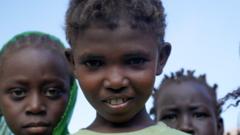
In Sudan, where conflict has forced 11 million people to flee their homes, the daily struggle to find food and safety has become a harsh reality, especially for children like Mahmoud, a 13-year-old orphan. Displaced multiple times due to the ongoing war—one of the worst humanitarian crises worldwide—Mahmoud represents the millions suffering as their homeland unravels amidst violence. Leading the charge for action is UN humanitarian chief Tom Fletcher, whose first field visit aimed to bring attention to Sudan’s dire situation, where famine has already been declared in some areas and more than half the population—25 million people—require immediate assistance. Amidst wars in Ukraine and Gaza, Fletcher emphasized that Sudan should not remain an "invisible crisis." The immense task of aiding displaced communities is compounded by the political turmoil at hand. Recent permissions from army chief Gen Abdel Fattah al-Burhan have opened avenues for the UN to deliver food aid, yet challenges remain. Organizers like Alex Marianelli, head of the World Food Programme (WFP) operations in Port Sudan, express the daunting difficulties encountered when navigating checkpoints controlled by the warring factions.Within these ravaged communities, initiatives like the safe house Shamaa, run by Nour Hussein al-Sewaty (Mama Nour), seek to provide refuge for vulnerable women and children— a bright spark of hope amidst despair. These local efforts, however, often fall short without external support. Romissa, a local aid worker, echoes the sentiment of the Sudanese people, prioritizing self-reliance during this challenging period. Displacement from their homes, compounded with rising sexual violence—an epidemic phrase by the UN—demands a united front from the Sudanese people to reclaim their lives and communities. The resilience shown by children like Mahmoud, who dreams of rebuilding his country, stands in contrast to the daunting challenges ahead, encapsulating both a cry for help and the steadfast hope that the Sudanese people will rise together.


