
In brief
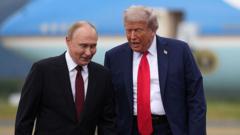
Recent dialogues and meetings in Alaska have heightened urgency for peace talks regarding Ukraine, but skepticism lingers amid contrasting political sentiments.
In the wake of a notable summit in Alaska, tensions remain palpable as the Kremlin has cooled expectations around a possible meeting between Russian President Vladimir Putin and Ukraine's President Volodymyr Zelensky. This shift follows remarks from former U.S. President Donald Trump, who has been advocating for direct discussions between the two leaders to navigate a resolution to the ongoing conflict in Ukraine.Trump's recent engagements with Putin and European leaders have seemingly deepened his awareness of the complexities underpinning the war. On a national platform, Trump acknowledged the challenges ahead, hinting at the possibility that Putin may not be inclined to reach a peace agreement. "We're going to find out about President Putin in the next couple of weeks," he commented, signaling uncertainty regarding the Russian president's intentions.In the backdrop, the Kremlin's spokesperson captured a more reserved stance, indicating any direct talks would need extensive preliminary discussions. Dmitry Polyanskiy, a Russian diplomat at the UN, articulated that the opportunity for dialogue has not been closed, asserting, "It shouldn't be a meeting for the sake of a meeting."Interestingly, reports surfaced that Putin proposed a visit by Zelensky to Moscow, a suggestion perceived as unrealistic by Kyiv, which could indicate Russia's aim to divert discussions rather than promote actual dialogue. Experts have speculated that Trump has gained an understanding of the diverging positions of both nations, particularly regarding conditions surrounding peace and security for Ukraine.While Trump has called for immediate ceasefire agreements, tangible progress has been lacking, and he shifted his focus towards meaningful peace arrangements. He underscored the need for security guarantees for Ukraine, influenced by discussions with Zelensky and European leaders, emphasizing these commitments are crucial for any potential peace deal.Amidst these developments, Trump's affirmations of U.S. aerial support if ground troops are engaged by European allies have brought forth questions. Nonetheless, details about the nature of such air support remain undefined. Notably, a Coalition of the Willing, led by France and the UK, continues to devise plans for a reassurance force for Ukraine in case hostilities cease, engaging in further talks with U.S. counterparts.As direct conversations between Trump and other leaders mark progression, doubts about the efficacy of a summit peak, as leaders such as French President Emmanuel Macron express skepticism regarding Putin’s sincerity in pursuing peace. This ambivalence resonates through the European leadership, reflecting a complex landscape where optimism fluctuates amidst the grim realities of a prolonged conflict.With high-level discussions on the horizon, the future of U.S. and European unity in efforts pertaining to Ukraine remains unclear; however, at least one sentiment prevails—the need for viable steps toward lasting peace amidst a backdrop of troubling geopolitical tension.


