
In brief
Nearly half of all cars sold in China last year were electric, reshaping the auto market in ways that benefit consumers and the environment.
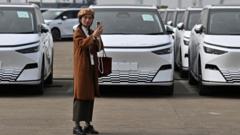
In recent years, the evolution of the electric vehicle (EV) industry in China has enthralled both local consumers and global markets. "I drive an electric vehicle because I am poor," shares Lu Yunfeng, a private hire driver at a charging station in Guangzhou. His sentiment is echoed by Sun Jingguo, who cites the lower costs and environmental benefits of EVs, highlighting a marked contrast to the perception of electric vehicles as luxury items in many countries.China's leadership began focusing on the future of transportation at the start of the 21st century, transitioning from a nation predominantly reliant on bicycles to the world’s foremost producer of EVs. With a population exceeding 1.4 billion, China sold close to half of all vehicles as electric in the past year, marking a startling leap in adoption rates. Auto analyst Michael Dunne notes, “When it comes to EVs, China is 10 years ahead and 10 times better than any other country.”Central to China’s EV boom is the government's strategic planning and investment. Wan Gang, a pivotal figure in the nation’s automotive policy, recognized early on the need to pivot from traditional fuel vehicles toward electric alternatives. This led to a decade of substantial government subsidies, with an estimated $231 billion invested in the EV sector since 2009, creating an ecosystem supporting innovation and competition. Consequently, companies like BYD and Nio are surging not only within domestic markets but are aspiring to expand internationally.A critical factor in China’s rapid EV growth is its robust infrastructure, particularly its extensive public charging network, which serves as a model for other nations. The combination of these policies and investments has reshaped the automotive landscape, making EVs accessible and financially viable for average consumers.Young buyers in China are increasingly drawn to the technology and features offered by these vehicles. EV makers like XPeng are adapting not only to consumer demands for affordability but also to technological advancements. Generational shifts towards eco-consciousness and modern tech features are evident in the consumer base, with offerings like self-driving capabilities and smartphone-like conveniences that appeal to the tech-savvy youth.Government subsidies further make the transition to electric vehicles financially appealing, offering perks such as tax exemptions and free registration for electric cars. As more individuals like Lu Yunfeng experience the cost savings associated with EV ownership, it supports a growing societal perception that electric cars are the future of urban transport.However, China’s dominance in the EV sector has raised skepticism among international competitors. The U.S., Canada, and EU have reacted with import tariffs, citing concerns about market fairness. Meanwhile, the UK has remained open, allowing brands like BYD to introduce models at competitive prices, helping to facilitate a shift toward zero-emission vehicles.Despite the benefits of electrification, there are underlying concerns regarding reliance on Chinese technology, especially with voices of caution regarding data security and potential state control. Yet for many consumers in China, the advantages of EV technology are clear, seen as a meaningful step towards an environmentally sustainable future.Ultimately, as countries worldwide aim to phase out traditional petrol and diesel cars by 2030, China stands as a powerful contender with plans to satisfy global demands, redefining the very essence of transportation as we know it. "The world should thank China for bringing this technology to the world," asserts Sun Jingguo, symbolizing the optimism that fuels China's ambitious forward trajectory in the automotive industry.

