In brief
The ongoing conflict between Israel and Hezbollah poses significant risks to Lebanon's ancient ruins, as recent airstrikes threaten sites recognized as UNESCO World Heritage landmarks. Archaeologists warn of the potential irreversible damage to the rich cultural heritage of Lebanon.
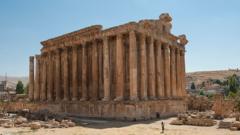
The Roman temples at Baalbek stand as remarkable testaments to ancient architecture, drawing attention to their vulnerability amidst the current military conflict between Israel and Hezbollah. Following an Israeli airstrike near the UNESCO World Heritage site, experts have raised alarms about the dangers posed to cultural heritage in the region. "You cannot recreate Baalbek if it were bombed; it would be an immense loss," warns Graham Philip, an archaeology professor at Durham University.Recently, Israel has escalated its military campaign in Lebanon, targeting regions that include not only military locations but also historically significant areas in the Bekaa Valley and outskirts of Beirut. Despite claims from the Israel Defense Forces (IDF) that they follow strict protocols to protect sensitive sites, local archaeologists such as Joanne Farchakh Bajjaly see the proximity of conflict to Baalbek’s temples as deeply concerning. Historically, Baalbek and Tyre are recognized not just for their architectural beauty but also for their historical significance, dating back thousands of years. UNESCO emphasizes this by officially designating the Temple of Bacchus in Baalbek as a prime example of Imperial Roman architecture. The recent evacuation orders for surrounding neighborhoods have forced civilians to seek refuge in ancient sites viewed as safer havens. This desperate assumption, noted by archaeologist Bajjaly, underscores the unsettling scenario that civilians may prioritize cultural landmarks over their lives amidst hostilities. Concerns extend beyond immediate warfare; Palestinian experts are already cataloging cultural damage in Gaza from similar violence, where a requisitioned UNESCO survey reported damage to numerous historical structures due to recent conflicts. Caution is warranted as Graham Philip emphasizes the broader implications of targeting cultural heritage, likening it to the destruction of iconic landmarks in any nation—an irreparable loss that extends beyond geography and into the realm of collective identity.The war's continuation puts the fate of Lebanon's heritage sites and the cultural history they encapsulate in peril, a reality that many believe requires urgent international attention and protection measures to prevent irrevocable loss.