In brief
In the pivotal 2024 election, Florida voters face a critical moment as they decide on Amendment 4, which seeks to overturn the state's stringent six-week abortion ban. This measure aims to restore access to abortion up to 24 weeks, reflecting a growing demand for reproductive rights.
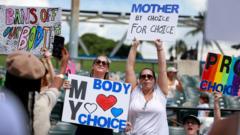
In a significant election that intertwines health rights with political sentiment, Florida voters are gearing up to make a powerful choice on a controversial amendment regarding abortion rights. On Tuesday, alongside the presidential race, residents will cast their ballots on Amendment 4, which seeks to annul the stringent six-week abortion ban enacted in May. The proposed amendment aims to permit abortions up to the point of fetal viability at approximately 24 weeks, with allowances for health considerations.Among those voting is Betsy Linkhorst, 18, who expresses her anxiety living in a state with limited reproductive options. “It’s important to vote based on our rights,” Linkhorst stated, advocating for both her presidential pick and Amendment 4. “I don’t think it’s the government’s right to police women’s bodies,” she added, highlighting the sentiment of many young voters in Florida.Polling indicates that the amendment enjoys majority support from Florida voters. However, the measure needs to clear a 60% approval threshold to succeed, and observers caution that while enthusiasm is present, securing that benchmark in a traditionally conservative state may prove challenging. Should it pass, activists view it as a landmark victory in the fight for reproductive rights.“There’s absolutely nothing holding us back from passing ballot measures everywhere it’s legal,” said Kelly Hall of the Fairness Project, underscoring the high stakes of Florida’s vote in the broader national context.This election marks the first since the U.S. Supreme Court's decision to overturn Roe v. Wade, which has prompted various states to adopt stricter abortion regulations. In Kentucky and Kansas, voters recently defeated measures to restrict abortion, signaling a shared national commitment to preserving access to reproductive healthcare, particularly in battleground states such as Arizona and Nevada.In contrast, figures like Florida Governor Ron DeSantis have vocally opposed Amendment 4, framing it as a radical shift that would compromise parental rights and promote unrestricted access. Meanwhile, supporters argue that misinformation surrounding the amendment has been pervasive, with state-backed initiatives opposing its passage.The issue divides voters, with some, like 88-year-old Nancy Collins citing their religious beliefs as reasons to reject the amendment. Others, however, share personal experiences that compel them to support broader access. Jonel Jones, previously a Democrat, illustrates this conflict as she votes for Trump while also choosing to support Amendment 4, citing concerns over the health implications of strict abortion laws for women in distress.As the clock ticks down to election day, voters in Florida must grapple with the implications of their choices, balancing political affiliations, personal beliefs, and broader societal norms around reproductive rights in a landscape heavily influenced by voices from both sides of the debate.