
In brief
The Pentagon has accepted a Boeing 747 from Qatar intended for the Air Force One fleet amid criticism from lawmakers and citizens alike; concerns center on the legality under the Emoluments Clause and potential national security risks.
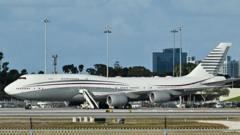
The Pentagon has confirmed its acceptance of a Boeing 747 from Qatar to augment the Air Force One fleet, a move that has sparked widespread controversy. Chief Pentagon spokesman Sean Parnell stated that this transfer adheres to federal regulations. However, critics, including some prominent supporters of President Donald Trump, have expressed concern regarding the implications of such a gift.This aircraft, valued at approximately $400 million, is a donation from the Qatari royal family and is expected to undergo extensive modifications before being utilized for presidential transport. Upgrades will likely include enhanced security measures required to protect the president from threats, including nuclear blasts and potential mid-flight refueling capabilities. Notably, the retrofitting costs might reach up to $1 billion, according to defense experts.Trump has justified the acceptance of the aircraft, labeling it as a generous gift from a foreign ally, asserting, “It would be stupid to turn down the plane.” In defending the legality of the transfer, Trump pointed out that it is a gift to the Department of Defense, not personally to him. Importantly, however, the transfer took place without prior congressional approval, raising questions about compliance with the Emoluments Clause of the US Constitution, which restricts foreign gifts to public officials.Currently, the Air Force One fleet consists of two Boeing 747-200 jets, operational since 1990, alongside several smaller aircraft. Trump’s dissatisfaction with Boeing due to delays in the production of new 747-8 jets has increased scrutiny over this new acquisition. Earlier this year, Trump inspected the Qatari plane privately at his Mar-a-Lago resort.Assurances from the Qatari Prime Minister Sheikh Mohammed bin Abdulrahman bin Jassim Al-Thani emphasized that the aircraft transfer is a government-to-government arrangement, unrelated to personal relationships. Yet critics remain wary. Senator Rand Paul has raised ethical concerns, questioning whether the US's evaluation of Qatar's human rights issues might be skewed by this significant gift. Additionally, Senator Ted Cruz highlighted potential national security risks, suggesting the possibility of espionage.As this deal unfolds, discussions about its legality and implications for US foreign policy and national security will likely continue, prompting both support and dissent across the political spectrum. The Air Force One fleet is poised for a transformation, signaling a new era in presidential air travel.



