In brief
The recent accidental discovery of Valeriana, a massive Mayan city buried in the jungle of Campeche, highlights advanced indigenous cultures that thrived in the region, shedding light on ancient urban life and the impacts of climate change.
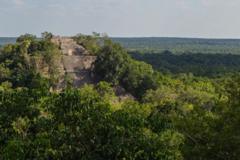
In a remarkable archaeological find, a massive ancient city known as Valeriana has emerged from obscurity in the dense jungles of Campeche, Mexico. This Mayan metropolis, believed to have flourished from 750 to 850 AD, showcases pyramid temples, an extensive network of causeways, sports fields, and amphitheaters, marking it as one of the largest Mayan sites, second only to the renowned Calakmul.The discovery came about "by accident" when Luke Auld-Thomas, a PhD student from Tulane University, stumbled upon Lidar (Light Detection and Ranging) data while browsing online. This technology utilizes radar pulses from aircraft to map the ground below and unveil structures previously concealed by foliage. "I was on something like page 16 of Google search," Auld-Thomas recalls, noting how he processed the data with archaeological methods to unveil the lost city, which could have supported a population of 30,000 to 50,000 at its peak. Researchers decided to name the city Valeriana after a nearby lagoon.This finding challenges long-standing Western perceptions that the tropical regions were inhospitable to ancient civilizations. Professor Marcello Canuto, a co-author of the study, emphasized that Valeriana exemplifies a "capital city" with a complex urban layout, contradicting assumptions of decline and abandonment in the region. Independent researchers, such as Professor Elizabeth Graham, reinforce the idea that Mayan cities were sophisticated and interconnected rather than isolated hamlets.Despite the excitement surrounding the discovery, the reasons behind Valeriana's decline remain unclear. Climate change appears to have significantly impacted its sustainability, with Auld-Thomas suggesting dense populations faced unrelenting droughts during the period of collapse. Historical factors, including warfare and Spanish conquests, further contributed to the decline of Mayan city-states.The implications of this discovery extend beyond Valeriana, as modern Lidar technology opens the possibility of many more undiscovered sites hidden beneath the canopy. Professor Canuto suggests that this method has allowed archaeologists to map vast areas—about ten times more than traditional techniques achieved over a century. However, this rapid discovery also poses challenges, with Auld-Thomas stating that while he hopes to personally visit Valeriana, the overwhelming number of sites makes it unlikely that all can be excavated.The research, published in the journal Antiquity, enriches our understanding of Mayan civilization, reinforcing the need for continued exploration and preservation of their history and cultural practices in an era when ancient knowledge remains vital for contemporary environmental stewardship.