In brief
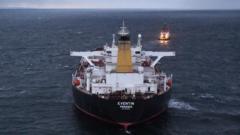
Germany's maritime agencies confirmed the presence of the Russian-owned oil tanker Eventin in the Baltic Sea, prompting critical dialogue around Russia’s attempts to evade international sanctions amid ongoing geopolitical tensions.
In a notable maritime incident, German authorities have reported that a Panamanian-flagged oil tanker, known as the Eventin, has become stranded in the waters off the coast of Germany. Preliminary assessments categorize the vessel as a part of Russia's controversial "shadow fleet," which is widely believed to be employed by Moscow to circumvent international sanctions imposed after the onset of the Ukraine conflict in 2022.The tanker, measuring an impressive 274 meters in length and carrying approximately 99,000 tonnes of oil, reportedly lost power and was left adrift at a cautious speed of 2.5 km per hour among rough sea conditions, leading to a coordinated rescue effort by German maritime authorities. Rescue operations included the deployment of tugboats as well as a helicopter intervention that enabled a team of specialists to reach the tanker and establish necessary towing connections.German Foreign Minister Annalena Baerbock voiced strong condemnation of Russia's maritime activities, framing them as a threat to European security and calling out President Vladimir Putin for reportedly leveraging a "rusty fleet" to breach international regulations. Despite accusations, Russian officials have maintained silence regarding the incident, reflecting a persistent strategy of denying the existence and operations of their shadow fleet, which comprises aging ships often operated without standard maritime insurance.This incident is indicative of broader tensions as Western powers enforce increasing sanctions on Russia's oil sector. The U.S., UK, and the EU have formally restricted trade with Russian energy companies, aiming to disrupt the financial capabilities of the Kremlin amidst its ongoing military aggression. Gazprom Neft, one such entity affected by the recent sanctions, denounced these actions as unfounded and illegitimate in statements to state media.The European Union previously expressed intentions to impose measures targeting the shadow fleet—ships sailing with ambiguous ownership and changing registries to evade scrutiny—which in recent months have been implicated in damaging undersea infrastructure in the Baltic. This latest incident serves not only as a maritime concern but also as a critical reminder of the geopolitical intricacies that intertwine globalization, energy needs, and national security.As efforts continue to rescue the Eventin and escort it to safety, the situation underscores a pivotal moment of reflection on the implications of maritime operations and the vulnerabilities posed by aging fleets.