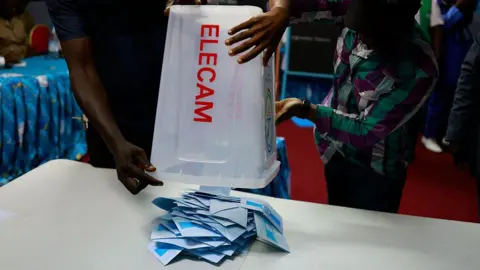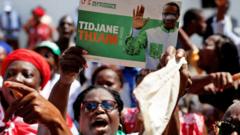
In Ivory Coast, the upcoming presidential election has taken a turn for the worse with the exclusion of former banking executive Tidjane Thiam from the race, a move that critics say reflects the distressing state of democracy in the country. Thiam, who returned to Ivory Coast after more than two decades abroad, was poised to challenge the current President Alassane Ouattara when a court ruled that he lost his Ivorian citizenship due to acquiring French nationality decades ago. The ruling came as Thiam was selected as the candidate for the Democratic Party of Ivory Coast (PDCI).
Thiam's political journey seemed promising, especially after the death of former President Henri Konan Bédié, but the court's decision put a damper on hopes for a competitive election. The implications of this ruling could further dishearten voters who already grapple with disillusionment toward the political establishment, especially considering that three other significant political figures have already been barred from standing due to past convictions linked to the civil conflicts between 1999 and 2011.
Amidst a regional backdrop characterized by increased military takeovers and discontent among the youth, many had anticipated that a vibrant election in Ivory Coast could set a precedent for democratic governance in West Africa. However, the revival of identity politics, reminiscent of divisions during the tumultuous past, obstructs this path. The ruling on Thiam's citizenship follows a controversial history in which "ivoirité" laws restricted candidates based on their perceived national origins.
Though the economic health of Ivory Coast shows signs of growth, with President Ouattara recognized as a significant figure in the region, the exclusion of qualified candidates like Thiam suggests a troubling twist in a nation that is struggling under the weight of its political legacy. Thiam's ongoing attempts to contest the ruling indicate that the political saga is far from over, with the potential for negotiated resolutions to unearth new opportunities for engagement in the electoral process. As the court remains pivotal in determining the future of these political rivalries, the question lingers: can Ivory Coast navigate its identity issues to uphold a true democratic process?
Thiam's political journey seemed promising, especially after the death of former President Henri Konan Bédié, but the court's decision put a damper on hopes for a competitive election. The implications of this ruling could further dishearten voters who already grapple with disillusionment toward the political establishment, especially considering that three other significant political figures have already been barred from standing due to past convictions linked to the civil conflicts between 1999 and 2011.
Amidst a regional backdrop characterized by increased military takeovers and discontent among the youth, many had anticipated that a vibrant election in Ivory Coast could set a precedent for democratic governance in West Africa. However, the revival of identity politics, reminiscent of divisions during the tumultuous past, obstructs this path. The ruling on Thiam's citizenship follows a controversial history in which "ivoirité" laws restricted candidates based on their perceived national origins.
Though the economic health of Ivory Coast shows signs of growth, with President Ouattara recognized as a significant figure in the region, the exclusion of qualified candidates like Thiam suggests a troubling twist in a nation that is struggling under the weight of its political legacy. Thiam's ongoing attempts to contest the ruling indicate that the political saga is far from over, with the potential for negotiated resolutions to unearth new opportunities for engagement in the electoral process. As the court remains pivotal in determining the future of these political rivalries, the question lingers: can Ivory Coast navigate its identity issues to uphold a true democratic process?