
In brief
The humanitarian crisis in Hassakeh, Syria, escalates as Turkish airstrikes disrupt water supplies and electricity, leaving residents desperate for access to this vital resource. Experts warn of potential violations of international law due to the targeting of civilian infrastructure.
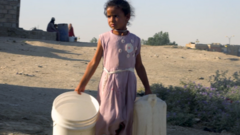
Turkish air strikes in the drought-stricken region of northeastern Syria have left more than a million residents without reliable access to water and electricity, triggering what experts describe as a severe humanitarian crisis that may violate international law. Since October 2019, Turkey has executed over 100 airstrikes targeting oil fields, gas facilities, and power plants in the Kurdish-held Autonomous Administration of North and East Syria (AANES), exacerbating an already precarious situation following years of civil war and extreme drought driven by climate change.The Alouk water station, the main source of water for the Hassakeh province, ceased operations due to damaged infrastructure caused by attacks on local power systems. As a result, communities that once relied on this water source are now forced to depend on water delivered via tanker trucks, which can only manage limited deliveries to critical facilities such as hospitals and orphanages. “In this city, water is more precious than gold,” said Ahmad al-Ahmed, a tanker driver, emphasizing the desperation that has overtaken many residents who find themselves pleading for water.The AANES has accused Turkey of intentionally undermining the Kurdish population’s existence through its military operations, which Turkey defends as necessary actions against what it designates as terrorist groups operating in proximity to its borders. The situation is further complicated by the ongoing conflict involving U.S.-backed forces that drove out the Islamic State (IS) group from the region. Turkish President Recep Tayyip Erdogan has labeled the AANES as a “terror state,” alleging that the groups it comprises are extensions of the PKK, a designated terrorist organization by various Western nations.In late January 2024, investigations revealed significant damage to electricity infrastructure across various locations, transitioning the region into a widespread blackout that directly affected water supplies. The UN has reported these attacks may constitute war crimes, as they have resulted in deprivation of essential resources to civilians. Climate change has compounded the challenges faced in northeastern Syria, with the Tigris-Euphrates basin experiencing sharply rising temperatures contributing to severe drought. The Khabour River, formerly a reliable water source, saw diminishing levels that forced reliance on the now-damaged Alouk station. Only a few years after Turkey established control over the Ras Al-Ain area, instability led to repeated interruptions of water supply due to military activity.Humanitarian organizations and international lawyers have called for investigations into Turkey’s military operations against civilian infrastructure, suggesting that these targeted strikes may be serious violations of international law. Turkey, however, maintains that its military actions are compliant with international humanitarian standards and blames the humanitarian crisis primarily on climate change and neglected water management in the region.As residents express feelings of abandonment and despair over the lack of adequate water supplies, many serve as poignant reminders of the pressing human rights and humanitarian issues underlying the conflicts in Syria. Osman Gaddo, of the local water board, voiced the sentiments of many when he stated the desperate need for help, saying, “We have made so many sacrifices... But nobody comes to rescue us. We are just asking for drinking water.”


