
In brief
The ongoing conflict in Myanmar sees the military declare a temporary ceasefire to facilitate humanitarian aid and reconstruction in the wake of a catastrophic earthquake, while tensions between governing forces and rebel groups persist.
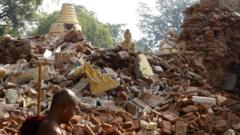
Myanmar's military has announced a temporary ceasefire from April 2 to April 22, aimed at expediting relief and reconstruction efforts following the devastating magnitude-7.7 earthquake that struck last week, claiming the lives of at least 2,886 individuals. In light of the disaster, rebel factions had previously called for a ceasefire to support aid initiatives, but the ruling junta’s recent statement marks a significant shift.The earthquake's severe impact was felt across several neighboring countries, including Thailand, where the current death toll stands at 21. Hundreds remain unaccounted for in Myanmar, escalating the crisis as violent clashes continue amidst a civil war involving the military junta and various ethnic militias since the coup in 2021. Incidents of conflict continue to hinder relief efforts, as evident in a recent confrontation where Myanmar's military reportedly opened fire at a convoy of the Chinese Red Cross that was delivering aid. The Ta'ang National Liberation Army (TNLA) maintained that they had informed the military of the convoy’s travel to Mandalay, which is near the earthquake’s epicenter. The military has claimed that they fired warning shots only after the convoy failed to stop at a signal. Thankfully, no injuries have been reported.China's foreign ministry confirmed the safety of its humanitarian team's personnel and supplies, emphasizing that all parties in Myanmar should prioritize the ongoing earthquake relief operations. The humanitarian crisis in Myanmar, already profound, has been exacerbated by last week’s earthquake, prompting multiple international aid efforts. As relief coordinators scramble to reach affected areas, military representatives highlighted that prior communication regarding aid convoys is essential to ensure proper coordination. The situation remains fluid as the country grapples with the dual challenges of disaster response and ongoing civil conflict.
