In brief
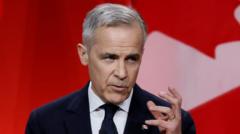
Mark Carney has officially been elected as Canada’s next prime minister following a decisive victory in the Liberal leadership race, taking aim at US tariffs imposed by President Donald Trump that threaten Canada's economy.
With Carney set to be sworn in shortly, the political landscape in Canada is shifting as he prepares to lead the government through upcoming challenges and controversies.Carney, a former central bank governor, made headlines after overwhelmingly winning the Liberal leadership contest, securing 85.9% of the vote against his closest competitor, Chrystia Freeland. His election comes as the backdrop of rising tensions with the United States, particularly over unjust tariffs imposed on Canadian goods by Trump, who has been known to characterize Canada as a potential 51st state of the US. In his victory speech delivered to a jubilant crowd in Ottawa, Carney underscored his commitment to safeguarding Canadian workers and families from what he termed as “unjustified tariffs,” focusing on unifying the nation in the face of external pressures. “Americans should make no mistake,” he proclaimed, “In trade, as in hockey, Canada will win.” He emphasized Canada's resilience and the need for solidarity among Canadians as they navigate what he describes as "dark days" due to decreased trust in the United States. Carney's leadership comes at a crucial time as he prepares to potentially face off against the Conservative Party, now led by Pierre Poilievre. While the Liberals have narrowed the Conservatives' lead in the polls, Carney will initially govern as the leader of a minority government, with the prospect of a snap election looming.In his speech, Carney hinted at legislative changes to maintain tariffs on US imports until mutual respect is established between the two nations. He added, “We must look after ourselves,” suggesting a focus on strategic autonomy in trade and policymaking.Amid these shifts, Carney is also likely to tackle domestic challenges including the housing crisis and rising living costs, presenting a centrist agenda that diverges from Trudeau's left-leaning policies. He aims to push forward on major energy projects and liberalize trade within Canada while diversifying trade relationships beyond the United States.The political landscape is charged as critics question Carney's past, particularly accusations surrounding his involvement with Brookfield Asset Management's head office relocation. However, supporters like Federal Public Safety Minister David McGuinty remain optimistic, believing Carney embodies the competencies needed for Canada’s future.As Carney prepares to take on the responsibilities of prime minister, his upcoming administration is expected to be defined by a strong stance on trade policy and domestic reforms that address long-standing issues affecting Canadians.