In brief
At Mustahed Hospital in Damascus, relatives of the missing scour through grim photographs of deceased prisoners, hoping to find their loved ones. As the Assad family's brutal legacy unfolds, emotions from despair to fleeting hope highlight the powerful toll of decades of violence and oppression in Syria.
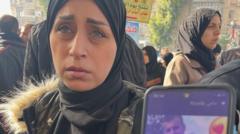
At Mustahed Hospital in Damascus, a somber scene unfolds as families of missing loved ones sift through a collection of photographs depicting the faces of deceased prisoners. Under the winter sun, many gather at a wall lined with images, searching for recognition in the twisted features of men who have endured unimaginable suffering. These faces belong to prisoners whose bodies have been transported to the hospital from a facility on the outskirts of the city, bringing the cold reality of loss starkly into focus.Relatives swarm the wall, gazing intensely at the captures, hoping to spot a familiar face. With cameras in hand, some seek confirmation for their grim findings, desperately hoping for closure. Yet, they are faced with the harsh reality that many bodies were already decomposing, a tragic testament to the brutality inflicted upon them. The hospital has reached its capacity, filled with the remnants of lives lost in Assad's infamous prisons.In the mortuary, the situation is equally harrowing. Bodies lay across a stark concrete floor in refrigerated trays, often identified only through tattoos or scars that could tell their stories. Families, meticulous in their search, search through opened body bags in a desperate bid to bring closure to years of uncertainty. Many show signs of severe trauma, including bruises and fractures, illuminating the harsh reality that lingers beneath the surface—a reflection of the Assad regime’s mercilessness.Dr. Raghad Attar, a forensic dentist working tirelessly to identify these victims, expresses her sorrow as she catalogues the lost. "It is very painful," she admits, grappling with the weight of the suffering surrounding her. She fervently calls for international support, hoping for a brighter future amid the backdrop of anguish.Among the families is Noor, who clutches a mask as she recounts her brother’s disappearance in 2012. The vague hints of his presence in Sednaya prison have become a painful shred of hope, compelling her to seek any semblance of closure. "We want to know what happened to him," she confides. Others tell similar tales; a woman mourns her son snatched away for a laptop inspection years ago, trapped in a labyrinth of fear created by the regime.The Assads' legacy evokes more than grief; it stirs deep aspirations for justice and resolution. Many families yearn not only for answers but for a future free from the specter of fear that loomed over their lives for decades, ever since the regime’s grip on power held firm.Former rebel fighters have returned to inspect the remnants of Assad's once-mighty palace, visible from most of Damascus, scrutinizing where the regime's power was so ruthlessly wielded. Haunted by memories of exile and turmoil, Ahmed, a former rebel, reflects on how he and others navigated a landscape of fear built by the Assads. The stark contrast between their suffering and the lavish lifestyle of the regime remains engrained in their memory.As rumors of potential retribution circulate through the streets, thousands flood the neighborhoods fervently yearning for justice against figures tied to past atrocities. Among them, an elderly woman underscores the price of revenge, advocating for the execution of a notorious intelligence officer responsible for past horrors. The crowd pulses with the desire for retribution, hopeful that a reckoning is on the horizon.In the turmoil of change, Syria stands at the precipice, awaiting new leadership amid the indelible stain of the Assads' regime. The way these new leaders handle this surge of longing for justice and closure will undoubtedly influence Syria's path forward in the wake of enduring suffering and resilient dreams for peace.