In brief
As India grapples with dwindling air power amid rising geopolitical tensions, the government weighs high-tech acquisitions against developing its own capabilities.
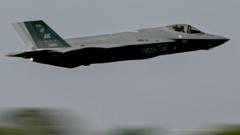
India is at a crossroads in its air force modernization efforts, sparked by Prime Minister Narendra Modi's recent discussions with US President Donald Trump about the potential acquisition of the F-35 fighter jet. This advanced aircraft, valued at around $80 million each, boasts state-of-the-art stealth technology and AI-driven systems. However, the decision is complex, given India's current need to address its dwindling fleet and the growing military prowess of neighboring China.Analysts perceive this US offer more as a symbolic gesture to bolster arms sales rather than a feasible option for India. The integration of an entirely new fighter, especially one without co-production rights, could pose significant challenges. Experts indicate that India would face administrative roadblocks and operational issues, making the F-35 a costly gamble amidst a strong push toward domestic defense production initiatives.India’s air force operates only 31 squadrons—well below the sanctioned 42—primarily made up of older Russian aircraft. Notably, a decade-long collaboration with Russia to manufacture the Sukhoi Su-57 has taken the backseat due to disputes over technology sharing and design specifications.Current assessments reveal a stark contrast in military capabilities; China has expanded its aerial fleet significantly within the last decade, while India’s inventory has declined. The Indian government is concentrating efforts on domestic manufacturing, with orders for the Tejas Mark 1A fighter already confirmed, and plans for more advanced jets are underway.Reform in India's procurement process, hindered since 2019, is also a pressing issue. With a clearer aim for transparency, the competition for the acquisition of multirole fighter jets has narrowed down to five candidates, with Rafale emerging as a leading contender.Despite the focus on homegrown solutions, operational delays and supply chain issues continue to threaten the timely delivery of essential components. As a result, the Indian Air Force has expressed its urgency for immediate effectiveness, even considering emergency procurements to bridge critical gaps.While the Tejas jets are indeed the future of India's air power aspirations, experts affirm that unless India can swiftly rectify the delays plaguing its defense projects, the country may find itself reluctantly exploring foreign options. The overarching vision remains: to build an indigenous air force capable of confronting evolving threats, while cultivating strategic partnerships that facilitate the integration of advanced technologies in the long run.