In brief
The Léon Thévenin, an undersea cable repair ship, plays a crucial role in keeping Africa connected to the global internet. With a dedicated crew of skilled technicians, it addresses damage to vital communication links caused by human activity and natural disasters, ensuring that millions can access online services even in times of disruption.
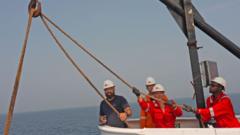
In a world where connectivity is vital, one ship silently plays a heroic role in safeguarding internet access for millions across Africa. The Léon Thévenin, large as a football field and staffed by a team of over 50 engineers and technicians, sails the coastlines of Africa, ready to address undersea cable failures that can plunge cities from Lagos to Nairobi into communications blackouts.The ship has been dedicated to this crucial repair work for over 13 years and its operations gained heightened significance after a series of internet blackouts exposed the fragility of online connectivity in 2022. Last year's cable damages highlighted how many businesses and individuals rely heavily on stable internet access for messaging, banking, and other essential transactions.“Because of me, countries stay connected,” states Shuru Arendse, a cable jointer from South Africa with more than a decade of experience aboard the Léon Thévenin. His pride reflects the sentiment shared among the crew, who see themselves as unsung heroes in their mission to restore digital communication capabilities for communities and businesses alike.The internet forms a vast network supported by numerous undersea cables that connect coastal cities to data centers worldwide, where vital information is stored. These cables, which are structured in pairs and protected with layers of materials, must be operational for smooth data transmission. However, human activity is the primary cause of cable damage, often due to anchors dragging along the seabed or fishing activities, which inadvertently create hazardous conditions on the ocean floor.While these cables are designed for longevity, natural disasters in some regions also pose risks. Officials on the Léon Thévenin noted that extreme weather can generate potent underwater currents capable of damaging cables. For instance, the Congo River's turbulent conditions can impact lines running through the Congo Canyon region, necessitating the ship’s swift response.In 2023, three significant cable outages disrupt connectivity, affecting millions across East Africa. The team aboard the Léon Thévenin had to jump into action, performing repairs that often take days, sometimes with little noticeable impact on users due to rerouting of data traffic.Uncovering cable faults can be a technological challenge that involves testing signal strength and voltage—sudden drops indicating a potential problem. If cables are harmed beyond depths of 164 feet, the Léon Thévenin is called in for repairs, using specialized remotely operated vehicles (ROVs) that search for and repair the damaged spots, often involving complex operations that resemble underwater welding.Though the crew is dedicated to their mission, those onboard face emotional sacrifices, often missing significant life events, such as weddings or anniversaries. Stories of personal loss and the desire to support families resonate among the crew—sacrificing time for a calling they believe in deeply, as their work serves as a crucial link for people across the continent.As the Léon Thévenin continues its journey, the team remains devoted to their roles, protecting Africa's internet infrastructure, while also finding connection and camaraderie in shared experiences, reflecting on their impactful work in binding the continent to the digital world.