In brief
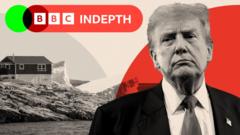
Greenland, long an autonomous territory of Denmark, grapples with its colonial legacy and the desire for self-determination amid growing American interest. Recent revelations about past injustices only intensify the call for independence from a perceived colonial past, while the prospect of U.S. control raises concerns over welfare and economic stability.
Article text:In the shadow of Nuuk’s cathedral stands a prominent 7ft statue of Hans Egede, a 18th-century missionary who reopened Greenland's ties to Europe and laid down the foundations for Denmark’s colonial claims. This statue has become a symbol of contentious history, especially following a notable act of vandalism when it was covered in red paint in the late 1970s, reflecting the discontent of the indigenous Inuit population towards colonial legacies. Greenland, which gained home rule in 1979, is home to approximately 57,000 people. While times have changed, the dreams of independence from Danish oversight are slowly coming to fruition with increasing momentum. Within Greenland's educational facilities, students began clamoring for instruction in their native language, marking the beginning of a cultural renaissance. Today, the political landscape is shifting once more, as former President Donald Trump’s intentions towards the territory raise questions over self-determination. Despite the Danish Prime Minister Mette Frederiksen’s insistence that Greenland "belongs to the Greenlanders," a poll suggests that only a small fraction of the population favors becoming an American territory, with 85% against the idea. The historical relationship between Denmark and Greenland, once viewed through a lens of benevolence, has been marred by revelations of systemic abuses, including unethical contraceptive programs and the forced removal of children from families. These actions led Greenland’s Prime Minister Múte Egede to describe them as acts of genocide, stirring echoes of a darker past. Though calls for independence resonate with two-thirds of the population, the challenges loom large. Economically, Greenland relies heavily on financial support from Denmark, raising concerns about future welfare systems should full independence be achieved. Questions about maintaining healthcare and services in a different governance framework dominate discussions around statehood.Despite the complexities, the possibility of free association with the U.S. or Canada emerges as a potential pathway to maintain economic benefits while asserting greater control over local affairs. Greenland’s ongoing engagements with nations like Norway and Iceland hint at a future where the island could seek a diversified international partnership while charting its own course.However, the specter of dependency is not easily cast off. The historical narratives regarding dependence on Denmark have impacted current mindsets. Greenlanders question whether true independence is ever achievable, given their small population and needs for a solid welfare structure. As discussions surrounding future governance intensify, many Greenlanders are caught in a dichotomy of longing for self-determination while fearing the implications of losing vital support from existing partners. The forthcoming years will be crucial in defining what identity, autonomy, and statehood mean for Greenland in the ever-changing dynamics of global politics and historical reckoning.