In brief
The European Court has struck down the Commission's refusal to disclose texts exchanged between Ursula von der Leyen and Pfizer's CEO amid vaccine contract discussions, signaling a push for transparency.
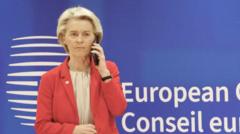
The European Commission's recent stance on maintaining secrecy over text messages exchanged between Ursula von der Leyen, the Commission president, and Pfizer CEO Albert Bourla has been deemed unjustifiable by the EU's General Court. This ruling, a pivotal development in transparency matters within the EU, comes after a journalist's Freedom of Information request in 2021 for access to these communications, which are central to discussions surrounding substantial vaccine contracts during the pandemic.On a backdrop of significant spending—billions of euros for vaccine doses—questions have been raised about the details of these messages, sparking the ongoing controversy dubbed "Pfizergate." Anti-corruption organization Transparency International has applauded the court's decision as a momentous victory for transparency advocates, calling for an overhaul of restrictive information policies within the EU. The court highlighted that the Commission had failed to provide a sound explanation for withholding the messages and pointed to a questionable record-keeping policy regarding mobile texts.The controversy traces back to 2021, when hints of private negotiations surfaced in a New York Times article authored by Matina Stevis, prompting further investigation into von der Leyen's communications. After the Commission denied all requests for the text exchanges, an inquiry by the European Ombudsman suggested neglect in searching for these messages, leading to legal action initiated by Stevis and her publication.The court ruled that the Commission cannot merely assume that the documents do not exist; it must actively prove their absence or address their potential deletion. This ruling raises serious questions about the accountability and transparency of EU institutions, particularly when it involves agreements that impact public health on a massive scale. The Commission is now faced with the task of reassessing its approach to public records, especially given the potential implications for von der Leyen's already scrutinized leadership amidst the pandemic.