In brief
Abida Sultaan, the first female heir to the throne of Bhopal, broke barriers in a male-dominated society. Her story, which encompasses her defiance against purdah, a tumultuous marriage, and her advocacy for women's rights, serves as an empowering narrative for Muslim women. Even after her departure to Pakistan, her remarkable legacy continues to inspire.
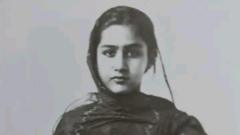
In a world where the expectations of royal women rarely align with their actions, Abida Sultaan stands out as an extraordinary figure in Indian history. Born in 1913 to the last Nawab of Bhopal, Hamidullah Khan, Abida was far from the traditional image of a princess. Eschewing the norms of her time, she was known for her short hair, prowess in polo, and adventurous spirit, which included flying planes and driving a Rolls-Royce by the age of nine.Her upbringing in a lineage of powerful women, or 'begums,' saw her raised in an environment that emphasized equality for both genders. "We girls were not allowed to feel any inferiority on account of our sex," she recounted in interviews, highlighting the liberal mindset instilled in her by her grandmother, Sultan Jehan. This strong foundation enabled her to gain the title of heir at just 15 years old, breaking the stereotypical mold of Muslim womanhood.Abida's life took a stylish detour when, at the age of 12, she was married to Sarwar Ali Khan, the ruler of Kurwai. Yet her foray into matrimony was marked by a sense of confusion, as depicted in her humorous retellings of her wedding day, which found her unexpectedly thrust into the role of bride without adequate preparation. Her marriage ultimately dissolved due to personal strife and her struggles with intimacy, shedding light on the often-silenced discussions of sexuality among Muslim women of her time, as noted by historian Siobhan Lambert-Hurley.In a startling moment defining her fierce independence, Abida confronted her husband during a custody battle over their son, Shahryar. With a revolver in hand, she stood her ground, declaring the end of the dispute. Subsequently, as a single mother, she led her state's cabinet from 1935 until India's partition in 1947, navigating the complex political climate while interacting with noted figures like Mahatma Gandhi and Jawaharlal Nehru.Abida's later years were wrought with challenges as communal violence flared during the partition, which prompted her move to Pakistan in 1950. In her new homeland, she fervently advocated for democracy and women's rights, leaving an indelible mark before her death in Karachi in 2002. Despite her legacy facing a decline amid rising communal politics, journalist Shams Ur Rehman Alavi asserts that Abida Sultaan, affectionately remembered as 'bia huzoor,' will remain a poignant symbol of resilience. Her life story serves not just to inspire Muslim women, but all marginalized voices seeking empowerment and recognition in a world still craving change.